Info
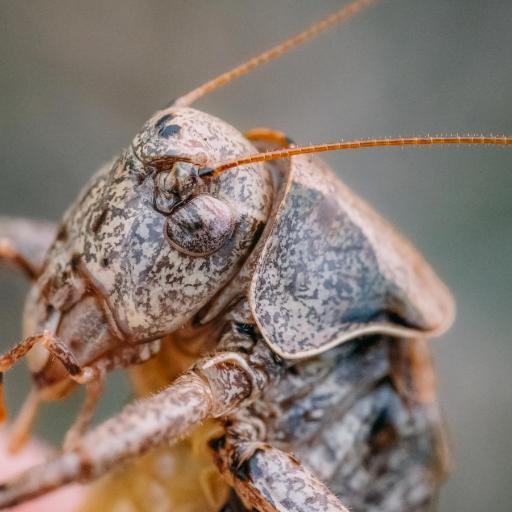
The Dark Bush-cricket is a master of camouflage that often looks more like a wandering piece of bark than an insect. Frequently mistaken for a large spider as it scurries through garden leaf litter, this flightless wonder is a staple of European hedgerows and bramble thickets. While many crickets are known for long, melodic songs, this species is famous for its short, sharp "tsick" that punctuates quiet summer afternoons.
🔍 How to Identify
- 🟤 Stunted Wings: Unlike many of its cousins, this cricket has very short, vestigial wings that look like small, square scales. It is completely flightless.
- 🍂 Rusty Tones: Its body is a deep, rich brown or grayish-brown, often with a contrasting pale yellowish-green belly that is visible from the side.
- 🗡️ The Upcurved Sword: Females possess a prominent, sword-like organ called an ovipositor that curves sharply upward; while it looks like a stinger, it is only used for laying eggs in soil or dead wood.
🌲 Habitat & Ecology
- 🕸️ The Garden Guardian: These insects are omnivores with a predatory streak. While they occasionally nibble on fruit or leaves, they are excellent natural pest controllers, actively hunting aphids, caterpillars, and small spiders.
- 🌿 Edge Dweller: They rarely venture into open grass, preferring the "edge" habitat of tall weeds, brambles, and garden hedges where they can quickly retreat into the shadows if a bird approaches.
⚠️ Safety & Toxicity
- 🛡️ Harmless Ally: The Dark Bush-cricket is non-toxic and lacks any form of venom. It is entirely safe to have in a garden where children or pets play.
- 🤏 Gentle Handling: While they are not aggressive, a large adult may deliver a tiny, pinprick-like nip if squeezed or handled roughly. Their "sword" is strictly for eggs and cannot sting.
✨ Fun Fact
The "ears" of the Dark Bush-cricket are not on its head! Like many members of its family, it listens to the world through tiny slits located on its front legs, just below the "knees."
More Details








