Info
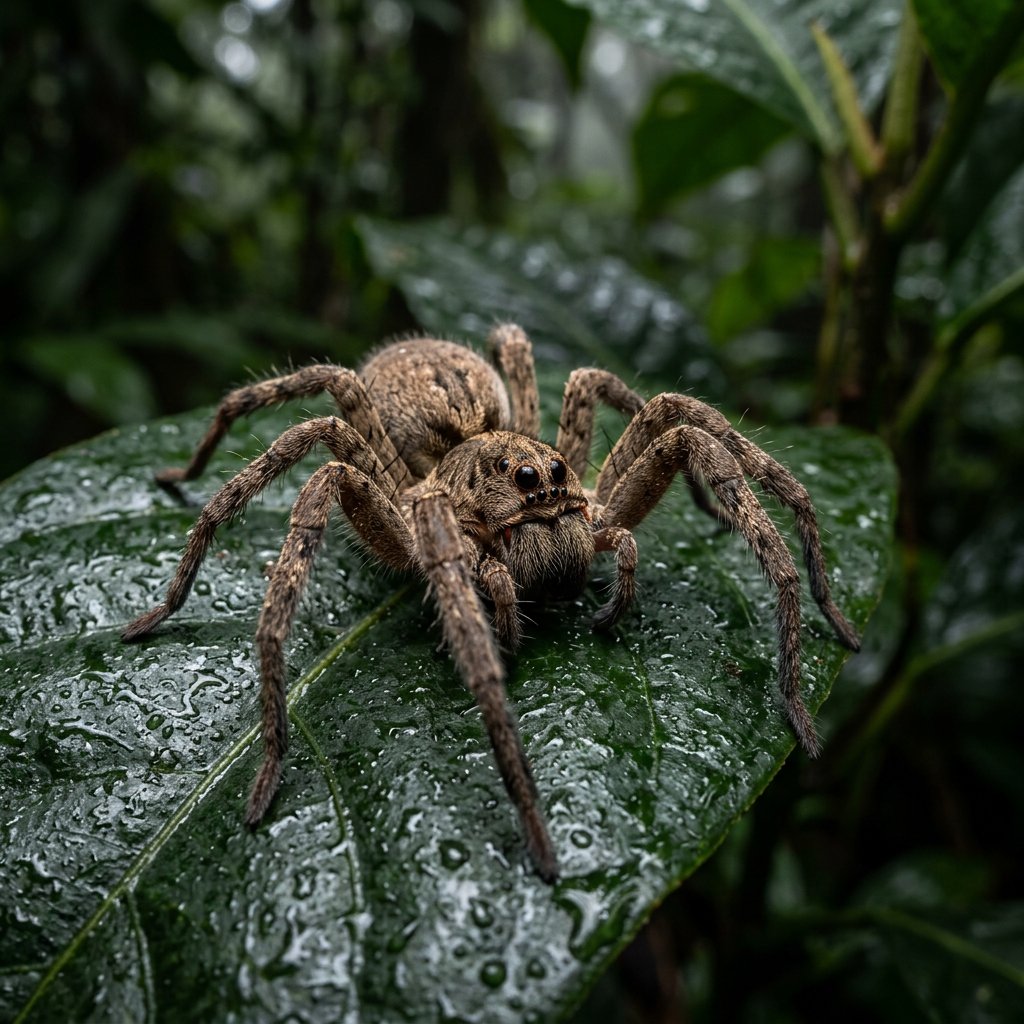
🕷️ The Wandering Spider (Phoneutria boliviensis)
The Phoneutria boliviensis, often referred to as a "Wandering Spider" or "Brazilian Wandering Spider," is a misunderstood giant of the rainforest floor. While they carry a reputation as fearsome predators, they are primarily nomadic hunters that prefer to avoid humans unless they feel directly threatened. Unlike web-building spiders that wait patiently for a meal, these creatures are active hunters, prowling the night in search of prey.
🔍 How to Identify
- 👁️ Eye Arrangement: They possess a characteristic arrangement of eight eyes, with the middle pair significantly larger than the others, providing them with excellent motion detection.
- 🦵 Stance: When threatened, they perform a distinct "defense display," rising on their hind legs and waving their front, often bright-red, pedipalps in the air to intimidate attackers.
- 📏 Size & Color: They have a robust, hairy body reaching up to 5 inches in leg span, typically exhibiting mottled shades of brown, gray, and tan that act as perfect camouflage against bark and leaf litter.
🌲 Habitat & Ecology
- 🌿 Hunting Strategy: They do not spin webs to catch food. Instead, they roam the forest floor and low-lying vegetation at night, using their incredible speed and potent venom to subdue crickets, frogs, and even small lizards.
- 🌙 Nocturnal Nomadism: During the day, they seek out dark, damp, and sheltered crevices to hide. This behavior occasionally leads them into human cargo, such as banana shipments, which is how they have earned the nickname "Banana Spider" in some regions.
⚠️ Safety & Toxicity
- 🚫 Status: DANGER: MEDICALLY SIGNIFICANT. This spider is highly venomous. While they prefer to flee, if cornered or provoked, they are capable of delivering a painful and dangerous bite.
- 🩺 Details: The venom contains potent neurotoxins that can cause severe pain, inflammation, and potential systemic issues in humans. Always maintain a respectful distance of at least several feet. If you spot one in your home or luggage, contact a professional pest control service—do not attempt to handle or relocate it yourself. Keep pets and children away from the area immediately.
✨ Fun Fact
- The genus name Phoneutria is derived from the Greek word meaning "murderess." This dramatic title reflects their aggressive hunting style and the potency of their venom, which is biologically designed to be incredibly fast-acting on the nervous systems of their prey.
More Details








