Info
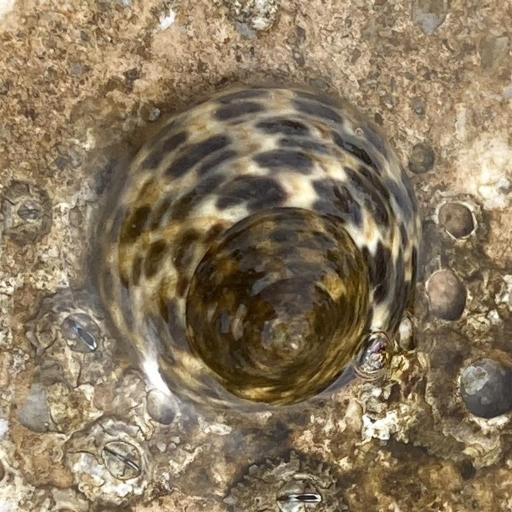
Often found clinging to sun-drenched rocks where the waves crash, the Turbinate Top Shell (Phorcus turbinatus) is one of the most iconic residents of the Mediterranean and North Atlantic coastlines. While it may be mistaken for a simple pebble at first glance, this resilient sea snail is a master of survival in the harsh "splash zone." For thousands of years, these snails have been a part of the human story, with their shells frequently discovered in prehistoric archaeological sites.
🔍 How to Identify
- 🐚 The Shell: It features a thick, conical shape resembling a turban, typically consisting of five to six rounded whorls that taper to a point.
- 🏁 The Pattern: The exterior is usually a dull greenish-gray or yellowish-white, decorated with a striking "checkerboard" pattern of dark purple or chocolate-brown spots.
- 🦷 The "Tooth": If you flip the shell over, you will see a pearly-white interior and a characteristic small bump or "tooth" on the inner edge of the opening (aperture).
🌊 Habitat & Ecology
- 🧗 Rocky Shores: These snails are strictly intertidal, meaning they live on the rocks between the high and low tide marks, where they must endure both crashing waves and hours of baking sun.
- 👅 Algae Grazer: They are the "janitors" of the coastline, using a sandpaper-like tongue called a radula to scrape microscopic algae and biofilm off the rock surfaces.
- 🛡️ The Operculum: To survive being out of water, they use a leathery "trapdoor" (the operculum) to seal themselves inside their shells, trapping moisture and protecting them from predators like crabs and birds.
⚠️ Safety & Toxicity
- ✅ Safe & Harmless: The Turbinate Top Shell is completely non-toxic and lacks any mechanism to bite, sting, or irritate human skin.
- 🌊 Environmental Warning: While they are edible and a traditional snack in some coastal regions, you should never consume them collected from the wild near ports or urban areas, as they can accumulate pollutants and heavy metals from the seawater.
✨ Fun Fact
These snails are remarkably "loyal" to their vertical zones! Research shows that if you move a Phorcus turbinatus further down the shore into deeper water, it will immediately begin climbing back up to its preferred height on the rocks to stay in the perfect "splash zone" environment.
More Details








