Info
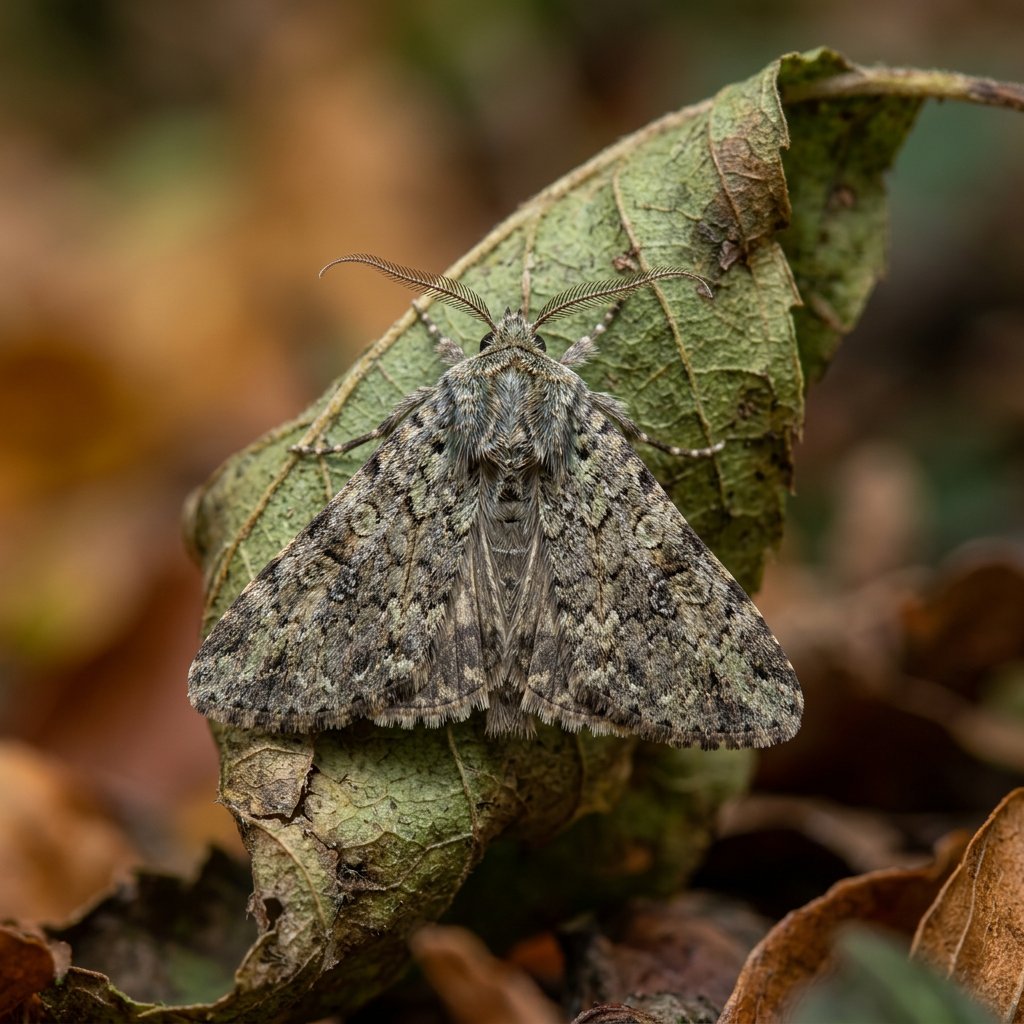
The Turbulent Phosphila (Phosphila turbulenta) is a master of two worlds: the art of invisibility and the power of a synchronized crowd. While the adult moth is a camouflage expert that vanishes against a backdrop of bark, its caterpillar stage is a bold, striped socialite that takes over vines in the eastern United States with a flair for the dramatic.
🔍 How to Identify
- 🎨 The "Warning" Stripes: As larvae, these caterpillars are unmistakable, featuring vibrant yellow and black longitudinal stripes that run the entire length of their bodies.
- 🍂 Cryptic Adults: The adult moth is much more subtle, sporting mottled shades of brown, tan, and gray with jagged lines that perfectly mimic the texture of dried leaves or tree bark.
- 👯 Strength in Numbers: You will rarely find a caterpillar alone; they are gregarious and feed in large, synchronized clusters, often coating a single stem in a mass of yellow and black.
🌳 Habitat & Ecology
- 🍴 The Smilax Specialist: These insects are almost exclusively found on Greenbrier (Smilax) vines. If you see a cluster of striped caterpillars stripping a thorny vine bare in a woodland or garden edge, you’ve likely found them.
- 🌪️ The "Turbulent" Dance: They earn their name from their defense mechanism. When a predator (like a bird or wasp) approaches, the entire colony jerks their bodies back and forth in a frantic, rhythmic thrashing to scare the intruder away.
⚠️ Safety & Toxicity
- ✅ Status: Harmless to humans and pets.
- 🛡️ All Bark, No Bite: Despite their bright "warning" colors and erratic movement, these caterpillars do not have stinging hairs or venom. They rely entirely on visual intimidation and their "strength in numbers" to survive.
✨ Fun Fact
The "Turbulent" Phosphila caterpillars are so coordinated that they can actually communicate through the plant. They use vibrations to signal to their siblings when they've found a good spot to eat, ensuring the whole "gang" stays together for protection!
More Details








