Info
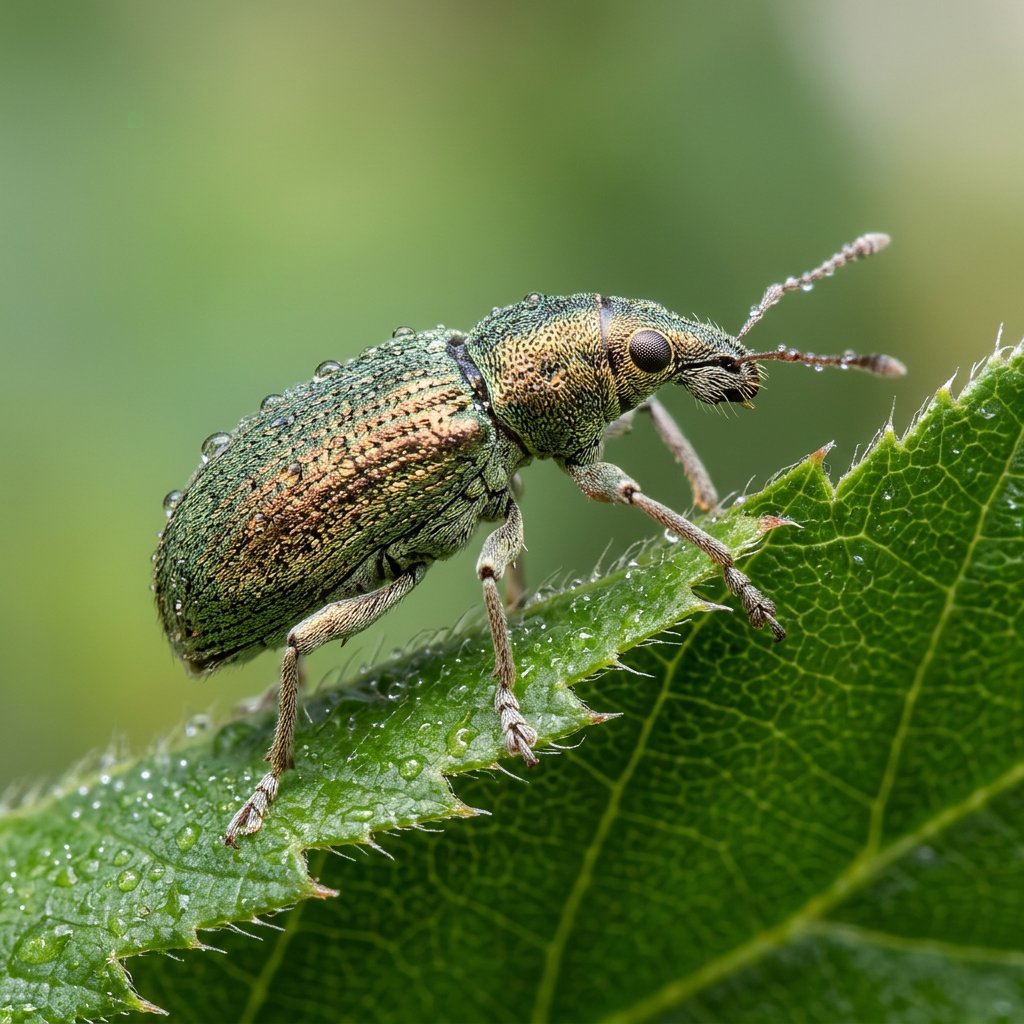
Often called the Brown Leaf Weevil, Phyllobius oblongus is a common summertime visitor that gardeners frequently find lounging on their fruit trees or rose bushes. While they belong to the "weevil" family—which often gets a bad reputation—these slender beetles are more of a minor garden guest than a destructive foe. With their tan, woody coloring, they are masters of camouflage against tree bark.
🔍 How to Identify
- 🪲 The Coloration: Unlike its bright green cousins, this species is typically a soft tan or reddish-brown. It often looks slightly "fuzzy" or metallic due to tiny scales covering its body.
- 👃 The Snout: It possesses a short, broad snout (rostrum). While some weevils have long, needle-like noses, this one has a blunt, sturdy face designed for munching leaf edges.
- 🦵 The Legs: Look closely at the legs; they are usually a lighter, pale orange or yellow-brown, contrasting slightly with the darker body.
🌲 Habitat & Ecology
- 🍂 The Diet: These beetles are generalists. They love deciduous trees, especially Hawthorn, Oak, and fruit-bearing trees like Cherry or Apple. They nibble on the edges of leaves, creating characteristic "notches."
- 🌱 Subterranean Youth: While you see the adults on the leaves in May and June, the larvae live a secret life underground. They spend the winter in the soil, gently feeding on plant roots before emerging as beetles in the spring.
⚠️ Safety & Toxicity
- ✅ Harmless to Humans: The Brown Leaf Weevil is completely safe. They do not sting, they do not bite humans, and they do not carry diseases.
- 🐶 Pet Safety: They are non-toxic to cats and dogs. If a curious pet eats one, the only "danger" is the crunchy texture of the beetle's exoskeleton.
- 🌿 Plant Health: In most cases, the damage they do to plants is purely cosmetic. Unless a tree is very young or heavily infested, there is no need to use harsh chemicals to remove them.
✨ Fun Fact
When a Brown Leaf Weevil feels a vibration or sees a shadow, it doesn't always fly away. Instead, it practices thanatosis—it will tuck in its legs and drop to the ground like a tiny pebble, "playing dead" until it feels the coast is clear.
More Details








