Info
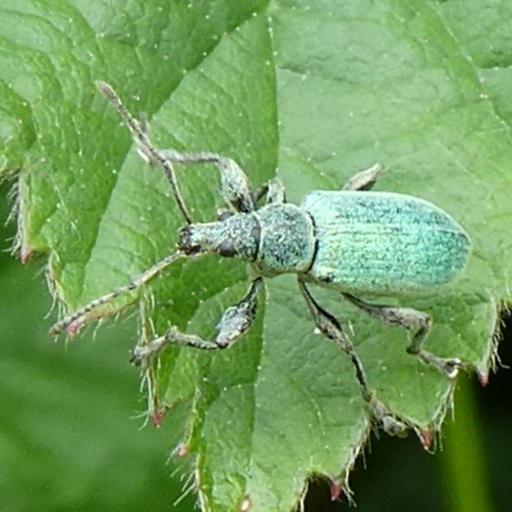
Often called the Nettle Weevil, this tiny beetle looks like a living gemstone crawling through the undergrowth. Draped in shimmering metallic scales that range from emerald green to bright turquoise, it is one of the most beautiful "creepy crawlies" you’ll find in a temperate garden. While many beetles hide, the Nettle Weevil proudly displays its iridescent armor on the leaves of its favorite snack: the stinging nettle.
🔍 How to Identify
- 💎 Metallic Scales: The most striking feature is its body, covered in tiny, round scales that reflect light in brilliant shades of green, gold, or blue.
- 👃 The Snout: Like all weevils, it has a distinct "nose" or rostrum, though in this species, it is relatively short and broad compared to its long-snouted cousins.
- 📐 Elbowed Antennae: Look closely at its snout to see two thin antennae that "bend" like an elbow, a classic trait of the weevil family.
🌲 Habitat & Ecology
- 🌿 Nettle Lover: As the name suggests, these insects are most commonly found on Common Nettles (Urtica dioica). They are herbivores that munch on the leaves, creating small, irregular holes.
- 🌱 Subterranean Youth: While the adults enjoy the sunshine on leaves, the larvae live a secret life underground, feeding on the roots of nettles and other perennial plants.
- 🛡️ The "Old Age" Look: If you find one that looks dull or black, it’s likely an older individual. The metallic green scales can rub off over time, revealing the dark, matte body underneath.
⚠️ Safety & Toxicity
- ✅ Harmless Friend: The Nettle Weevil is completely harmless to humans and pets. It does not bite, sting, or carry diseases.
- 🧤 Nettle Warning: While the insect is safe to handle, remember that it lives on stinging nettles! If you try to pick one up, watch out for the plant’s stinging hairs, which cause skin irritation.
✨ Fun Fact
When threatened, the Nettle Weevil is a master of "playing dead." It will tuck in its legs and roll off a leaf into the tall grass, becoming almost impossible to find until it feels the danger has passed!
More Details








