Info
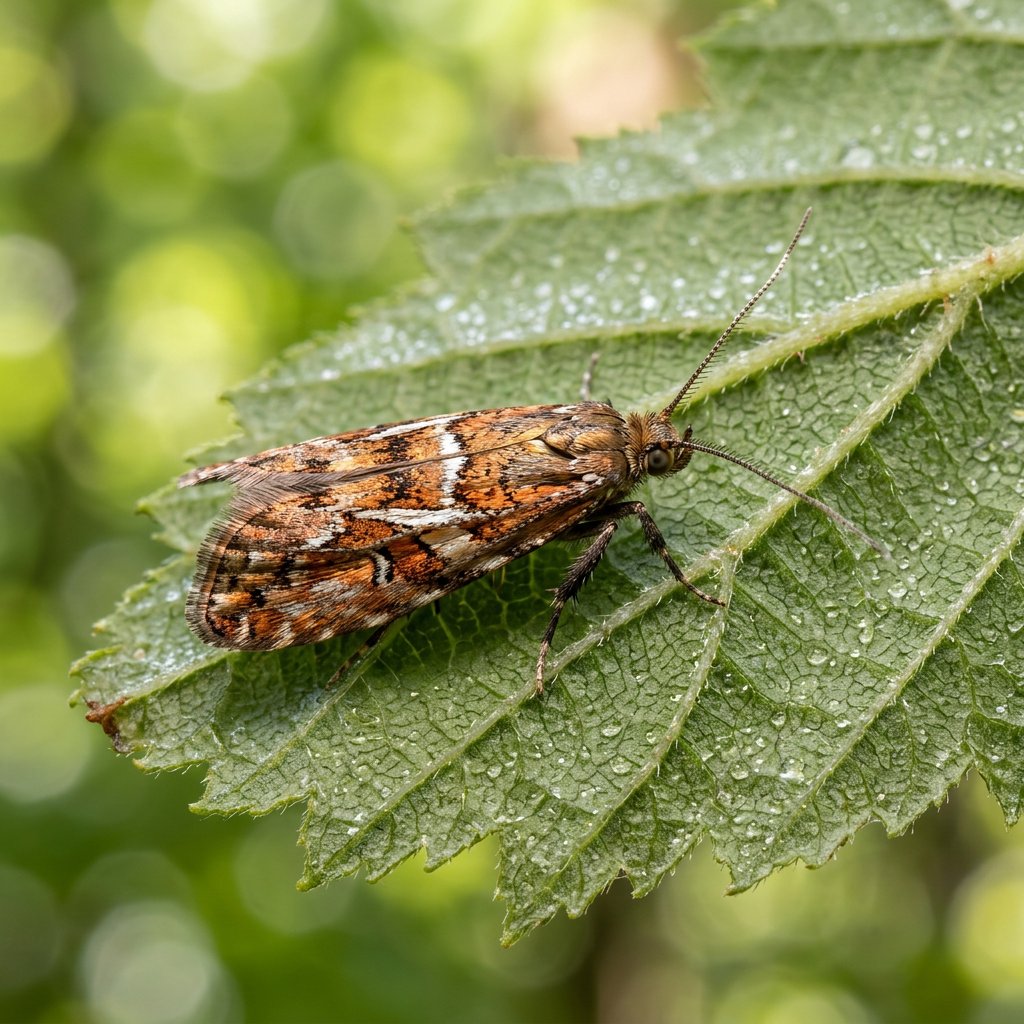
Often called the Nut Leaf Blister Moth, this tiny insect is a master of "internal architecture." While the adult moth is a miniature marvel of golden scales, it is most famous for the distinctive, silvery "blisters" its larvae create on hazel leaves. It is a common resident of European woodlands and gardens, living a secret life tucked between the layers of a leaf.
🔍 How to Identify
- 🦋 The Wings: The adult moth is tiny (about 7-9mm wingspan) with bright orange-golden forewings decorated with sharp, white V-shaped markings called chevrons.
- 🏠 The Upper-Surface Mine: Look for a pale, silvery-white "blister" on the top side of a Hazel leaf. Unlike other miners, this species specifically chooses the upper surface, usually positioned right over a leaf vein.
- 📐 Leaf Buckling: As the larva matures inside, it spins silk that shrinks, causing the leaf to pucker and fold upwards, creating a characteristic "tented" look.
🌲 Habitat & Ecology
- 🌳 Host Specificity: This moth is a specialist; it is almost exclusively found on Hazel (Corylus avellana), though it occasionally visits Hornbeam. If you have a hazel hedge, you likely have these tiny neighbors.
- 🍂 Seasonal Cycles: They are "double-brooded," meaning you can find their active leaf mines twice a year—once in July and again from September through October. The second generation often spends the winter tucked inside the fallen leaves on the forest floor.
⚠️ Safety & Toxicity
- ✅ Harmless: This insect is completely safe for humans and pets. It does not bite, sting, or possess any toxins.
- 🌿 Tree Health: While a heavy infestation might make a Hazel tree look a bit "wrinkled" or spotted, the damage is purely cosmetic. They are considered a natural part of the ecosystem and rarely require any intervention or pesticides.
✨ Fun Fact
To keep their tiny "rooms" sanitary, the larvae of the Nut Leaf Blister Moth are incredibly tidy. They bundle all of their waste (known as frass) into a neat pile at one end of the mine or silk it into the lining so they don't have to crawl through it while feeding!
More Details








