Info
Meet the Beech Leaf Midget, a tiny golden-brown moth that lives a secret life tucked inside the leaves of majestic beech trees. While the adult moth is rarely seen due to its minuscule size, its "architectural work" on foliage is a common sight in European woodlands and gardens. It is a harmless neighbor that plays a quiet, fascinating role in the woodland ecosystem.
🔍 How to Identify
- 🦋 The Adult Moth: A tiny, slender insect (wingspan of only 7-9mm) with shimmering orange-brown forewings decorated with distinct white, dark-edged diagonal stripes known as chevrons.
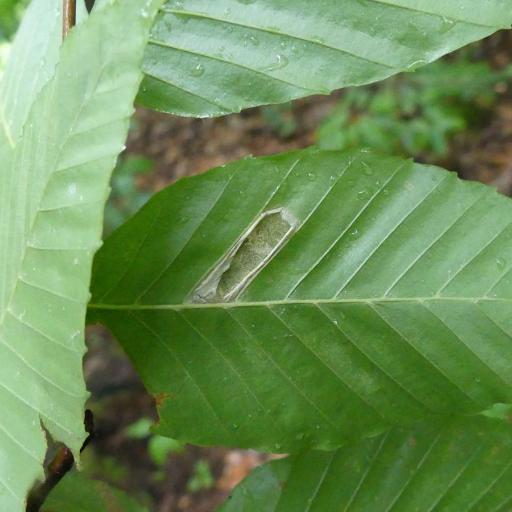
- 🍂 The "Mine": You are more likely to see the home than the moth. Look for a long, oval-shaped "blotch mine" on the underside of a beech leaf, typically tucked neatly between two side-veins.
- 🏚️ Leaf Puckering: As the larva grows and spins silk inside the leaf, the upper surface of the leaf bows or puckers upward, creating a tiny, visible "tent" or ridge on the top of the leaf.
🌲 Habitat & Ecology
- 🌳 The Beech Specialist: This insect is a true specialist; it is almost exclusively found on Beech trees (Fagus sylvatica). It is a "neutral" resident—neither a major pest nor a primary pollinator, but a natural part of the tree's biodiversity.
- 🍴 Internal Feeder: The larvae are "leaf miners," meaning they eat the internal tissue between the upper and lower skin of the leaf. This keeps them perfectly camouflaged and protected from predators like birds and wasps.
- 🍂 Life Cycle: They typically produce two generations a year. The second generation spends the winter as pupae inside the fallen brown leaves on the forest floor, waiting for spring to emerge as moths.
⚠️ Safety & Toxicity
- ✅ Status: Completely harmless to humans and pets. They do not bite, sting, or possess any toxins.
- 🌿 Plant Health: Even if a tree is covered in these "leaf mines," the damage is almost entirely cosmetic. The beech tree is usually unaffected by their presence, so there is no need for chemical treatments or concern for your garden's health.
✨ Fun Fact
The silk spun by the tiny caterpillar inside the leaf actually shrinks as it dries. This mechanical tension is what pulls the leaf into that characteristic "tented" shape, effectively creating a private, vaulted ceiling for the larva to live under!
More Details








