Info
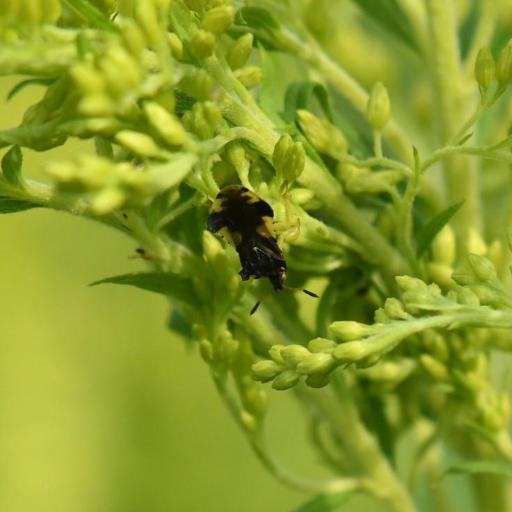
Often called the Jagged Ambush Bug, this tiny insect looks like a cross between a miniature tank and a prehistoric dragon. While its jagged edges and thick, crab-like forearms might look intimidating, it is a master of camouflage that plays a vital role in balancing garden ecosystems. It is a "friend" to gardeners who want to control pests, though it doesn't distinguish between a harmful beetle and a helpful honeybee.
🔍 How to Identify
- 🦂 Raptorial Forelegs: Its most striking feature is its thickened, "muscular" front legs. These resemble a praying mantis’s arms or a crab’s claw, perfectly evolved for snatching and holding prey.
- 🛡️ Jagged Silhouette: The abdomen is broad and flared, with distinctive "shoulders" and pointed, leaf-like edges that break up its body outline against plant life.
- 🎨 Camouflage Colors: Typically a mottled mix of greenish-yellow, cream, and dark brown. This allows it to disappear perfectly when tucked into the petals of late-summer blooms.
🌲 Habitat & Ecology
- 🌸 The Flower Ambush: You will rarely see these insects moving. Instead, they sit perfectly still on bright flowers—especially Goldenrod and Asters—waiting for a nectar-seeking insect to land within reach.
- ⚔️ The Tiny Giant-Slayer: Despite being less than half an inch long, they are incredibly strong. They are famous for successfully hunting insects twice their size, including large bumblebees and butterflies.
- 🍃 Pest Control: In the garden, they act as natural pest controllers, thinning out populations of flies, beetles, and other small leaf-munching insects.
⚠️ Safety & Toxicity
- 🩹 The Defensive Poke: They are not aggressive and do not seek out humans. However, if they are pinched or handled roughly, they can deliver a sharp "poke" with their beak (proboscis), which may cause minor irritation.
- 🐾 Pet Safety: They are non-toxic and possess no venom that is harmful to mammals. If a curious cat or dog sniffs one, the bug will likely just stay still or drop to the ground.
✨ Fun Fact
[Phymata americana] has an exoskeleton so thick and rugged that it acts like a suit of armor, protecting the bug from the frantic stings of bees and wasps while it is actively feeding on them.
More Details








