Info
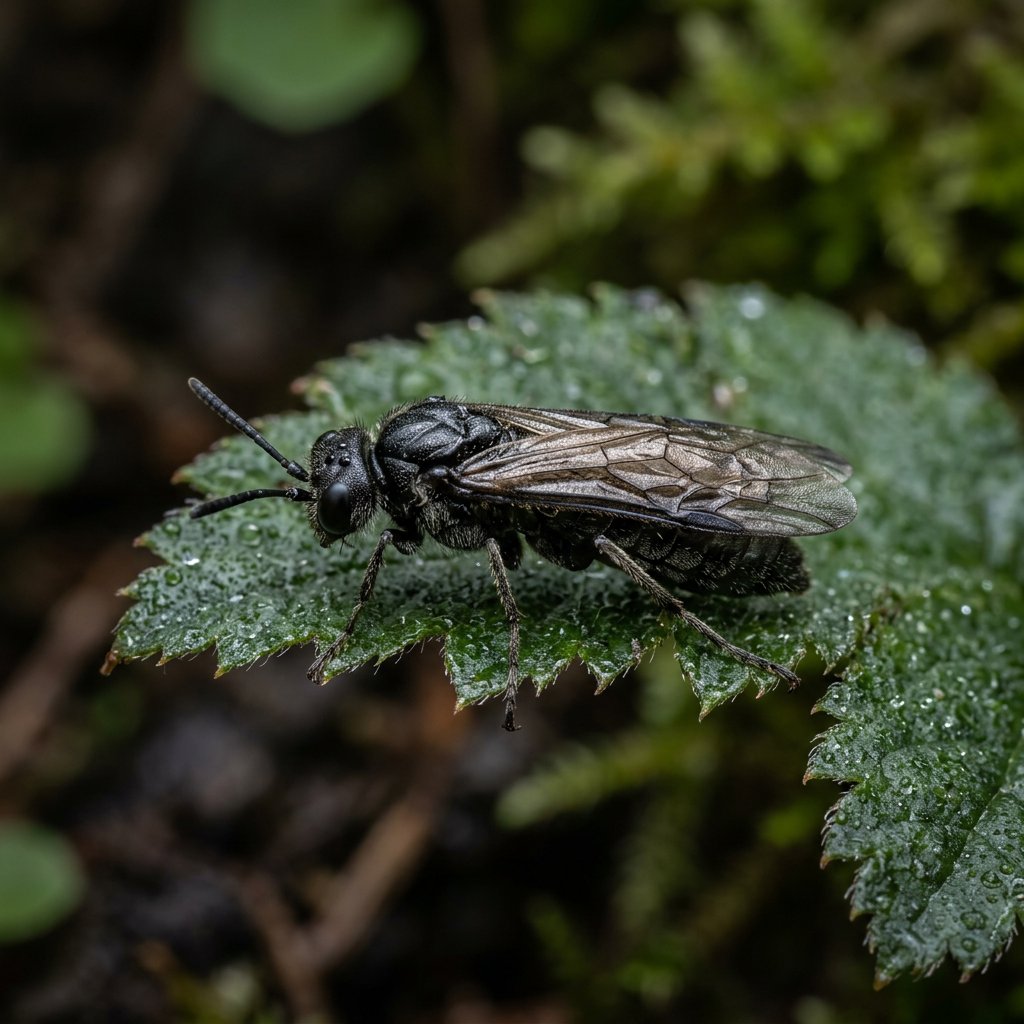
Often called the Solomon’s Seal Sawfly, this insect is a master of disguise and a specialist of the shadows. While the adult looks like a somber, dark-winged wasp, it is actually a stingless relative of bees. To a gardener, it is famous for its "magic trick": turning a lush, leafy Solomon’s Seal plant into a collection of bare ribs almost overnight.
🔍 How to Identify
- 🪽 The Adult Wings: The adults have striking, smoky-black wings that appear iridescent under the sun, paired with a stout, coal-black body.
- 🐛 The Spotted Larvae: The larvae are the most commonly seen stage. They are caterpillar-like, with a pale grayish-white or bluish body decorated with neat rows of tiny black dots.
- 🍃 Feeding Patterns: Unlike many insects that nibble edges, these larvae "skeletonize" leaves, eating everything except the tough central veins.
🌲 Behavior & Ecology
- 🍽️ A Picky Eater: This insect is a "host-specialist," meaning it almost exclusively feeds on plants in the Polygonatum (Solomon’s Seal) genus. If you don't have these plants, you likely won't see this insect.
- ⏳ Seasonal Timing: Adults emerge in late spring to lay eggs inside the plant stems using a saw-like appendage. The larvae then appear in early summer, feeding voraciously for a few weeks before disappearing into the soil to wait for next year.
- 🛡️ Defense Strategy: When disturbed, the larvae often arch their bodies into an "S" shape or drop to the ground to hide in the leaf litter.
⚠️ Safety & Toxicity
- ✅ Harmless to Humans: Despite their wasp-like appearance and the "saw" in their name, they cannot sting or bite humans or pets.
- 🥀 Plant Health: While they won't kill a mature plant, a heavy infestation can weaken it and ruin its aesthetic for the season. If you want to save your foliage, "hand-picking" the larvae into a bucket of soapy water is the safest organic method.
✨ Fun Fact
The name "Sawfly" comes from the female's specialized egg-laying tool, which is serrated just like a carpenter's saw. She uses it to physically "zip" open the tough skin of a plant stem to tuck her eggs safely inside!
More Details








