Info
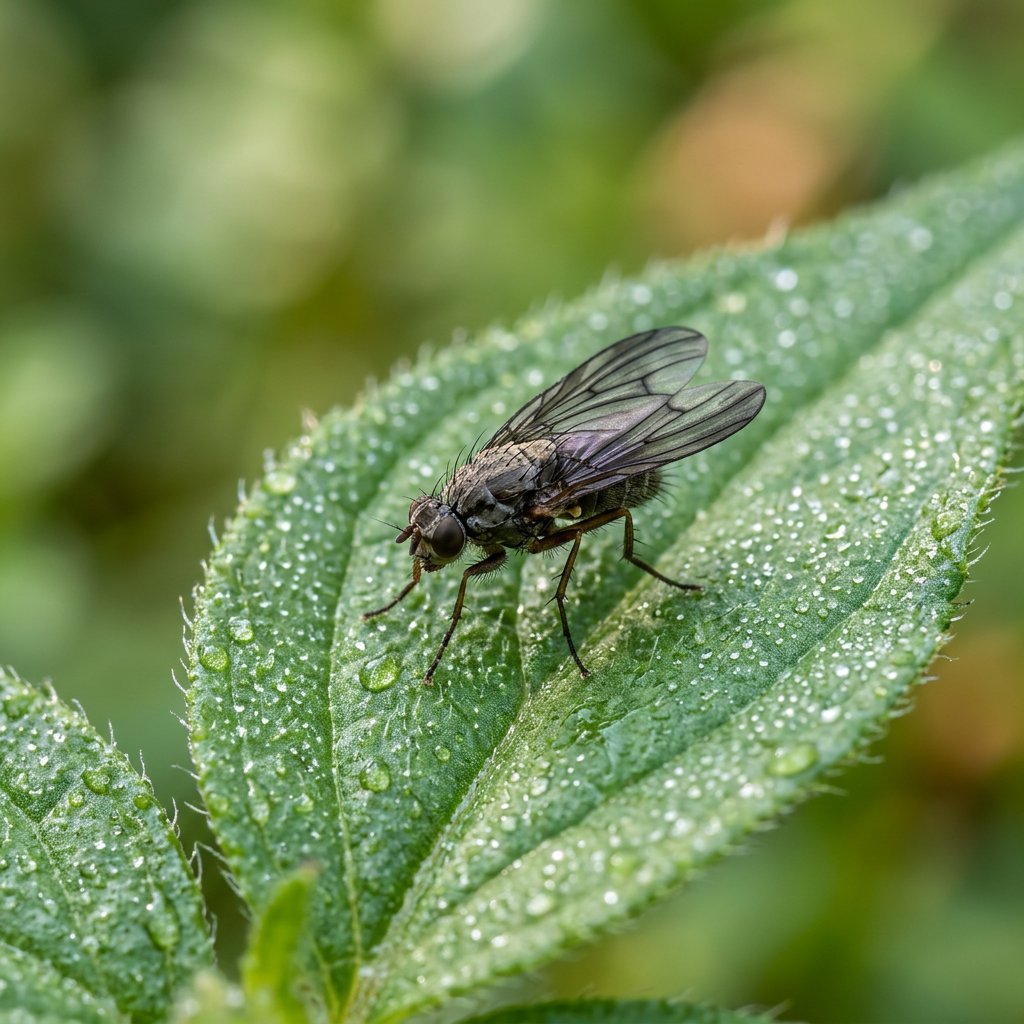
Meet the Impatiens Leafminer, a tiny "artist" that uses leaves as its canvas. While the adult fly is rarely noticed, its larvae leave behind unmistakable, winding white trails that look like secret maps etched into the greenery. Often found on Jewelweed and garden Balsam, these insects are more of a curiosity for nature lovers than a danger to the garden.
🔍 How to Identify
- 🪰 The Adult Fly: A minuscule, dark fly often featuring a distinct yellow spot on its back (the scutellum), though it is very difficult to spot with the naked eye.
- 🎨 The Mines: The most obvious sign is the "serpentine mine"—a thin, winding white or pale-green tunnel that widens as the larva inside grows.
- 🐛 The Larva: A tiny, translucent yellow or green maggot that lives entirely hidden between the upper and lower layers of the leaf surface.
🌲 Habitat & Ecology
- 🌸 Host Specificity: This insect is a specialist, meaning it is almost exclusively found on plants in the Impatiens genus, such as the common garden "Touch-Me-Not" or wild Jewelweed.
- 🏠 A Protected Home: By living inside the leaf tissue (mesophyll), the larva protects itself from the elements and many surface-dwelling predators while it feasts on the plant's nutrients.
- 🍂 Life Cycle: Once the larva is finished feeding, it usually cuts a small slit in the leaf and drops to the soil to transform into a pupa, eventually emerging as a new fly.
⚠️ Safety & Toxicity
- 🛡️ Status: Completely harmless to humans, children, and pets. They do not bite, sting, or carry diseases.
- 🌿 Plant Health: While the mines can look unsightly or "diseased," they are mostly an aesthetic issue. Even a leaf with several tunnels can usually still photosynthesize and support the plant's growth.
✨ Fun Fact
If you look very closely at the white trails through a magnifying glass, you can see tiny black specks. This is "frass" (larval droppings), which the insect neatly deposits in a line as it eats its way forward!
More Details








