Info
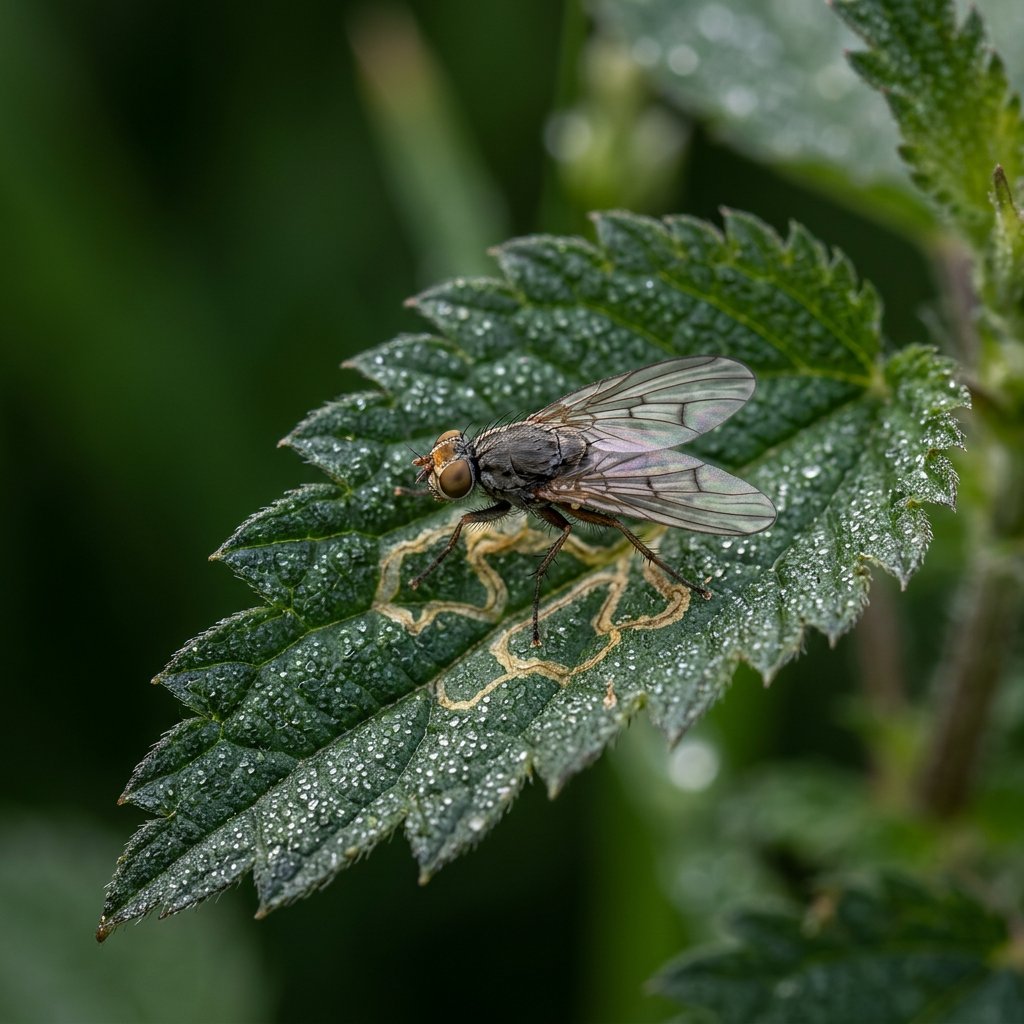
Often called the Burdock Leaf Miner, this tiny fly is an "under-the-radar" architect of the plant world. While you might never see the adult fly, you have likely seen its "artwork"—intricate, silvery trails winding across large Burdock leaves like mysterious calligraphy. It is a specialist species that spends its youth living inside the very fabric of a leaf.
🔍 How to Identify
- 🖋️ The Mines: Look for white or pale green serpentine tunnels (mines) that meander across the leaf surface. These tracks often widen as the larva grows.
- 🪰 The Adult: A miniature, dark-colored fly (only about 2-3mm long) that is rarely seen without a magnifying glass.
- 🐛 The Larva: A tiny, pale, legless maggot found tucked safely between the upper and lower layers of the host plant's leaf.
🌲 Habitat & Ecology
- 🌿 The Burdock Specialist: This insect is highly host-specific. It is almost exclusively found on Burdock (Arctium) species. If you see "map-like" squiggles on a Burdock leaf, Phytomyza lappae is the likely culprit.
- 🛡️ Internal Living: The larvae are "leaf miners," meaning they eat the soft internal tissue (mesophyll) while leaving the leaf’s "skin" intact. This provides them with a climate-controlled home that protects them from many predators.
⚠️ Safety & Toxicity
- ✅ Harmless: This insect is completely harmless to humans and pets. It does not bite, sting, or transmit any diseases.
- 🌱 Plant Health: While the tunnels might look dramatic, they rarely kill the host plant. They are considered a cosmetic nuisance rather than a serious garden threat.
✨ Fun Fact
The larvae are so well-protected inside the leaf that some species of tiny parasitic wasps have evolved specialized "ovipositors" (egg-laying needles) just to sniff them out and lay eggs inside the miners through the leaf surface!
More Details








