Info
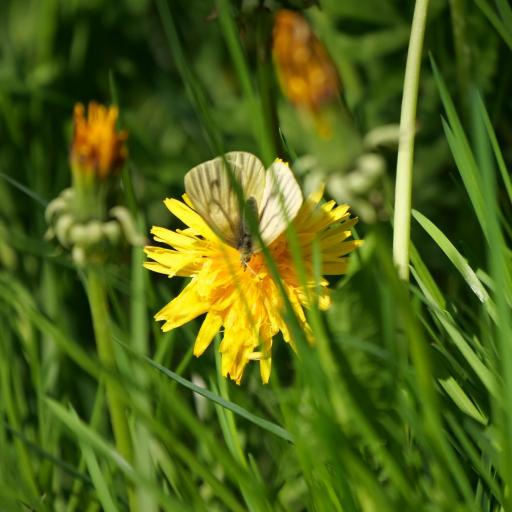
Known as the Margined White, this delicate butterfly is a ghost-like inhabitant of the North American wilderness. Unlike its cousin, the common Cabbage White, which thrives in sunny gardens and farms, the Margined White is a forest-dweller that prefers the dappled light of streamsides and wooded meadows. It is a vital native pollinator that signals a healthy, damp ecosystem.
🔍 How to Identify
- 🦋 The Wings: Primarily creamy white to pale ivory. On the underside of the hindwings, you will notice distinct grey or greenish-brown "smudges" following the line of the veins, which gives them their "margined" name.
- 📏 Body Shape: It has a slender, dark body and relatively rounded wing edges compared to other Pieris species.
- 📍 Markings: Unlike many butterflies, the upper side of the wings is often purely white or contains only very faint black spots at the tips, making it look like a floating piece of paper in flight.
🌲 Habitat & Ecology
- 🥗 The Host Plants: The caterpillars are picky eaters, feeding almost exclusively on native plants in the Mustard family (Brassicaceae), such as toothworts and rockcress.
- 💧 Moisture Seekers: You won't usually find these in dry, open fields. They stick to cool, humid environments like shaded canyons, mountain valleys, and riverside thickets where their host plants stay lush.
- 🐝 Gentle Pollinator: As adults, they are active nectar seekers, moving slowly between woodland wildflowers. Because they stay low to the ground and fly with a jerky, fluttering motion, they are relatively easy to observe.
⚠️ Safety & Toxicity
- ✅ Harmless: The Margined White is a "friend" to the garden and the hiker. It does not bite, sting, or carry any diseases harmful to humans.
- 🐾 Pet Friendly: There are no known toxins associated with this butterfly, making it perfectly safe if a curious dog or cat happens to cross its path.
- 🥬 Not a Pest: While it belongs to the same genus as the "Cabbage Worm" butterfly, Pieris marginalis rarely ventures into vegetable patches and is not considered a threat to your kale or broccoli.
✨ Fun Fact
The Margined White is a "polytypic" species, meaning it looks very different depending on when it was born! Spring individuals usually have very dark, heavy veining to help absorb heat from the weak sun, while summer individuals are much paler to prevent overheating.
More Details








