Info
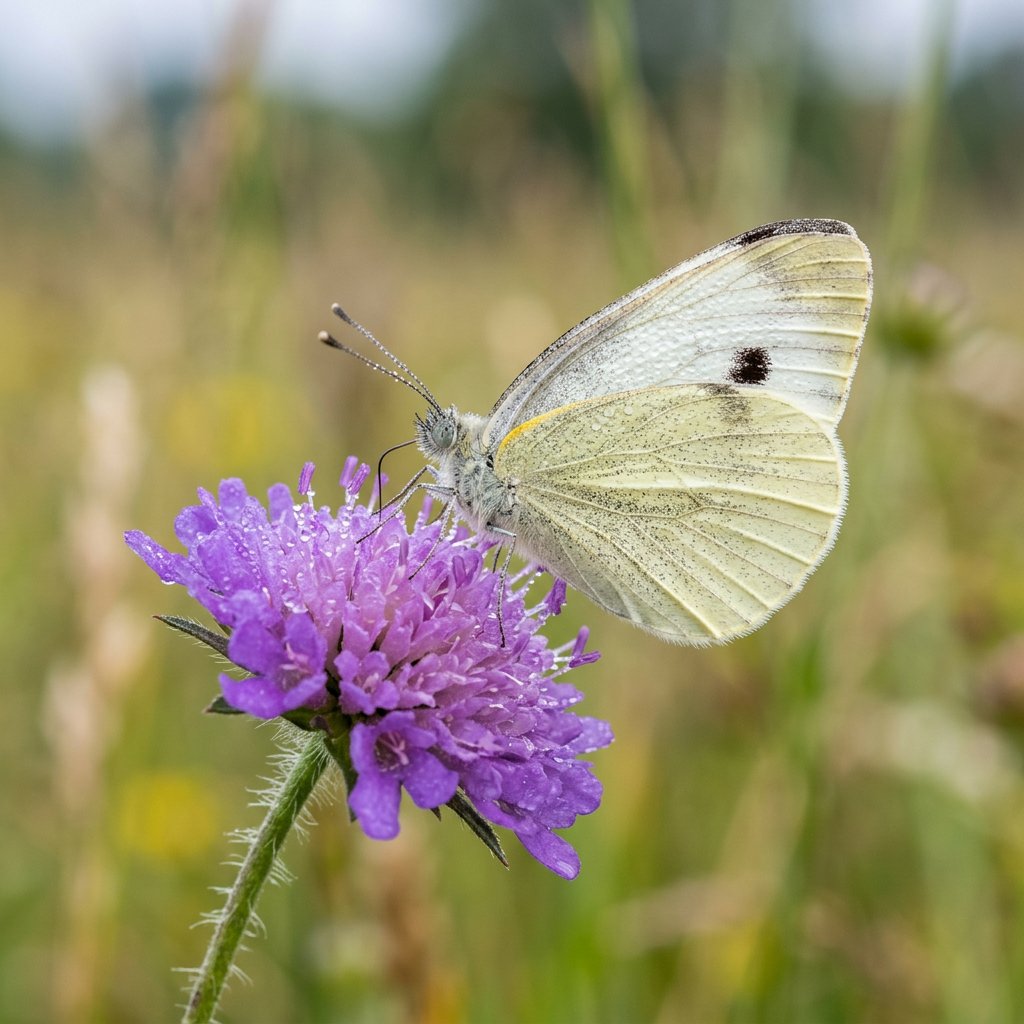
Often called the Small White or the Cabbage White, this delicate-looking visitor is a staple of sunny meadows and vegetable patches across the globe. While its snowy wings are a classic symbol of summer, it is perhaps the most famous "frenemy" of the backyard gardener. To a nature lover, it is a graceful flyer; to a kale grower, it is a sign that trouble is brewing beneath the leaves.
🔍 How to Identify
- 🦋 Wing Color: The upper wings are a crisp, creamy white with distinct black tips on the forewings.
- ⚫ Spot Patterns: You can tell the gender apart by their spots! Females typically have two black spots on each forewing, while males usually have only one.
- 🍃 Under-wing Camouflage: When the butterfly closes its wings to rest, the undersides are a pale, yellowish-green. This allows them to vanish against the backdrop of a leaf.
🌲 Habitat & Ecology
- 🥬 The Brassica Specialist: These butterflies are drawn to gardens and farms specifically looking for the "Mustard" family (Brassicas). They lay their tiny, bullet-shaped yellow eggs on the undersides of cabbage, broccoli, and kale leaves.
- 🌼 Generalist Pollinator: While the caterpillars are picky eaters, the adults are not. They are active pollinators that visit a huge variety of nectar-rich flowers, from dandelions to lavender, helping your garden thrive.
⚠️ Safety & Toxicity
- ✅ Status: Completely harmless to humans and pets.
- 🚫 Non-Stinging: They possess no stinger or mandibles capable of biting humans. They are gentle creatures that rely entirely on flight and camouflage for protection.
- 🥬 Garden Impact: While safe to touch, they are "toxic" to your harvest! The green caterpillars are voracious eaters and can quickly turn a head of cabbage into a lace-like skeleton if left unchecked.
✨ Fun Fact
✨ An Accidental Voyager: Though now found nearly everywhere, this butterfly isn't native to North America. It is believed to have "hitchhiked" from Europe to Quebec in the 1860s, likely as larvae on a shipment of vegetables. Within just a few decades, it had conquered the entire continent!
More Details








