Info
Often called "Sentinel Wasps," members of the Pimpla genus are the silent guardians of the garden. Unlike their social cousins that crash picnics, these solitary wasps spend their days patrolling foliage in search of garden pests. They are a masterclass in biological control, wrapped in a sleek, jet-black suit, and are one of the best allies a gardener can have.
🔍 How to Identify
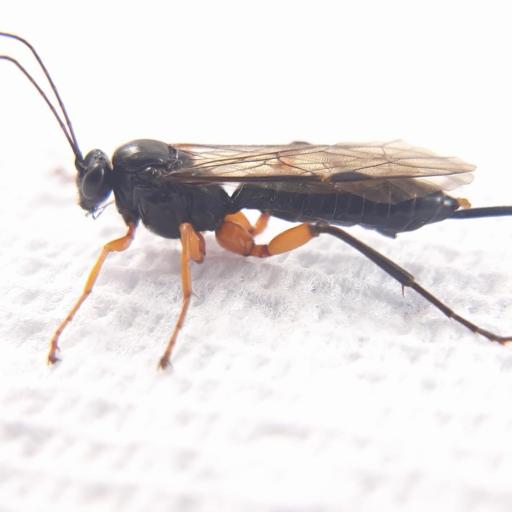
- 🖤 Sleek Armor: Most species have a robust, shiny black body that looks polished to a high gloss.
- 🦵 Colorful Boots: They are easily recognized by their contrasting legs, which are often a vivid orange or reddish-brown, standing out sharply against their dark bodies.
- 🗡️ The Ovipositor: Females possess a visible, needle-like "tail." While it resembles a stinger, it is actually a specialized tool used to pierce the cocoons of other insects to lay their eggs.
🌲 Habitat & Ecology
- 🦋 The Pest Hunter: These wasps are parasitoids, specifically targeting the pupae of moths and butterflies. By keeping these populations in check, they naturally protect your plants from hungry caterpillars.
- 🌸 Nectar Feeders: While the larvae are carnivorous, the adults are gentle nectar drinkers. You will frequently find them hovering around "umbrella-shaped" flowers like Dill, Fennel, and Wild Carrot, which provide easy access to their food.
⚠️ Safety & Toxicity
- 🛡️ Non-Aggressive: Pimpla wasps are solitary, meaning they have no hive to defend. They are incredibly docile and will not sting humans unless they are physically squeezed or trapped against the skin.
- 🐾 Safe for Households: They pose no threat to curious pets or playing children. Their "stinger" is designed for soft insect pupae and is rarely strong enough to cause a significant reaction in humans.
✨ Fun Fact
- Vibration Sensing: A Pimpla wasp can "hear" with its feet! By tapping its antennae and sensing microscopic vibrations through its legs, it can locate a moth pupa hidden deep inside a rolled leaf or a silken cocoon without ever seeing it.
More Details








