Info
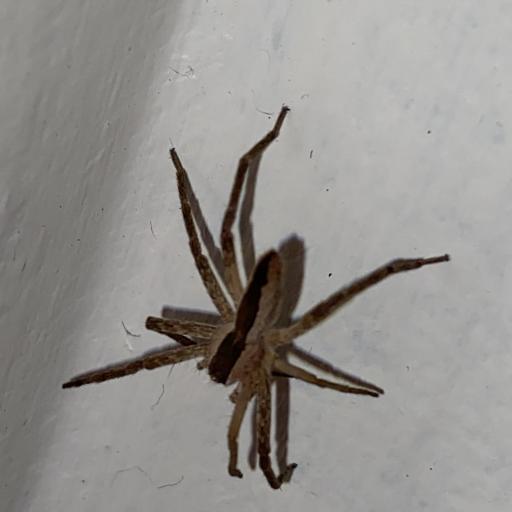
Often mistaken for a wolf spider at first glance, Pisaurina mira is a master of the tall grass. Known commonly as the Nursery Web Spider, it earned its name from the protective silk "tents" the mother constructs for her young. While its long legs and quick movements might startle a gardener, this spider is a shy, beneficial predator that acts as natural pest control.
🔍 How to Identify
- 🎨 The Racing Stripe: It features a prominent, dark brown or tan longitudinal stripe running down the center of its back, often bordered by thin, wavy white lines.
- 📐 The "X" Stance: When resting on a leaf, it typically holds its front two pairs of legs straight forward and close together, making its body look like a slender "V" or "X."
- 👀 Eye Arrangement: Unlike wolf spiders which have two very large eyes, the Nursery Web Spider has eight eyes of similar size arranged in two slightly curved rows.
🌲 Habitat & Ecology
- 🌾 Meadow Life: These spiders prefer "vertical" habitats like tall weeds, shrubs, and forest edges. They are active hunters that do not spin a web to catch prey, instead using their speed to ambush insects.
- 🕸️ Maternal Instincts: You will often see the female carrying a large, white egg sac under her "chin" (held by her fangs and silk). Just before the eggs hatch, she builds a silk nursery in the foliage to house the spiderlings, guarding them fiercely from the outside.
⚠️ Safety & Toxicity
- ✅ Harmless Neighbor: Pisaurina mira is not considered dangerous to humans. They are incredibly shy and will almost always drop to the ground or hide behind a leaf when approached.
- 🩹 The Bite: While they are capable of biting if squeezed or handled roughly, their venom is mild. For a human or a curious pet, the sensation is typically no worse than a weak bee sting and results in minor localized redness.
✨ Fun Fact
During the "dating" phase, the male Pisaurina mira often uses a silk thread to tie up the female's front legs. This isn't just for show—it's a survival tactic to keep her from eating him before the mating process is finished!
More Details








