Info
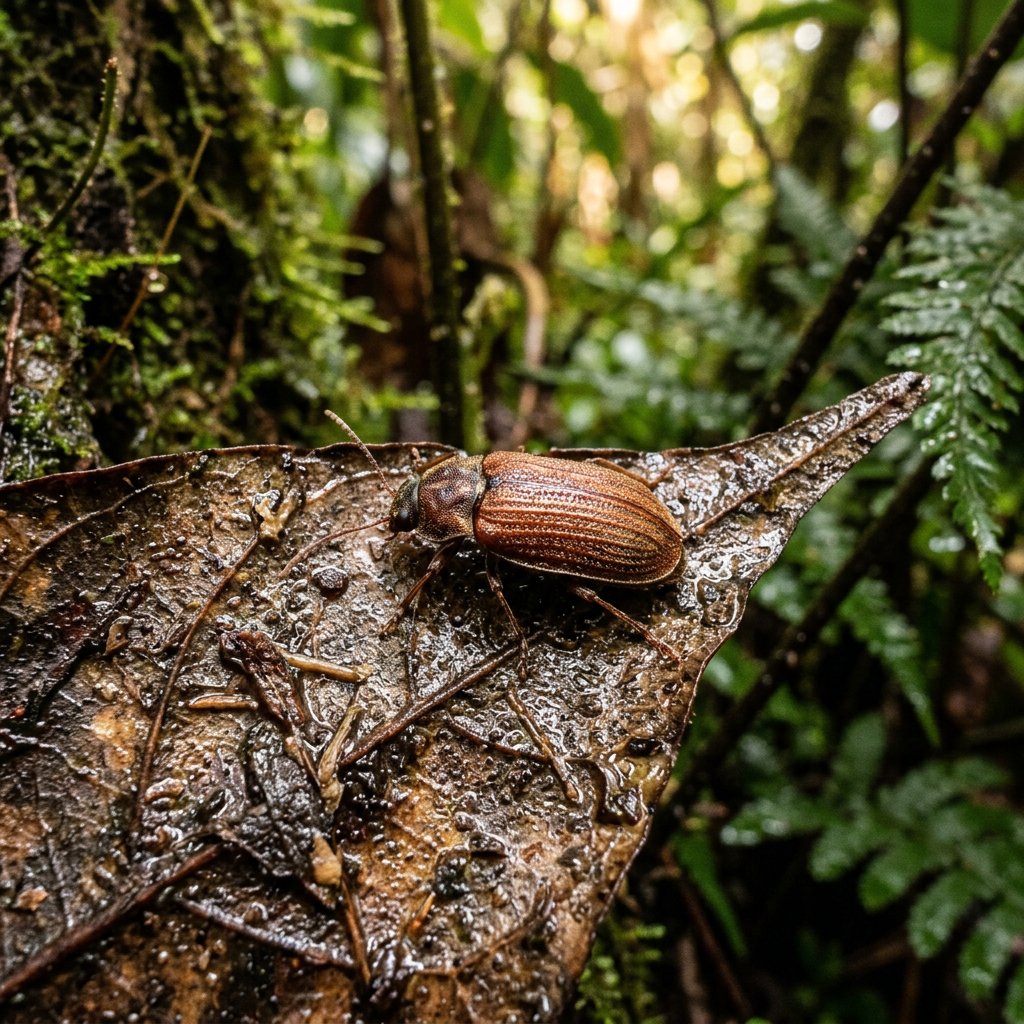
Commonly known as a variety of Leaf Beetle, the Pistosia testacea is a small but resilient resident of tropical and subtropical foliage. Often found clinging to the undersides of large leaves, its name "testacea" refers to its distinct brick-red or brownish-orange color, reminiscent of ancient earthenware. While it might look like a tiny shield moving across your garden, it is a specialized herbivore with a very specific palate.
🔍 How to Identify
- 🪲 The Shield Shape: It possesses a distinctively flattened, oval-shaped body, which allows it to squeeze into the tight crevices of unfolding leaf buds.
- 🎨 Earth-Toned Armor: The wing covers (elytra) are a solid, polished shade of reddish-brown or "testaceous" orange, often with a subtle metallic sheen under direct sunlight.
- 🐜 Hidden Features: Its head is often partially tucked under a broad, smooth neck-shield (pronotum), and its antennae are medium-length and beaded.
🌿 Habitat & Ecology
- 🍽️ A Palm Specialist: This beetle is a "foe" to some and a neutral neighbor to others; it primarily feeds on plants in the palm family (Arecaceae) and gingers. They often spend their entire life cycle tucked inside the young, unrolled fronds of their host plant.
- 🛖 Secretive Lifestyle: Unlike butterflies that flaunt themselves, Pistosia testacea prefers the shadows. Its flat body is an evolutionary masterpiece designed for hiding from predatory birds within the narrow gaps of tropical greenery.
⚠️ Safety & Toxicity
- ✅ Harmless to Humans: This beetle is a gentle giant in the insect world—well, minus the "giant" part. It does not bite, sting, or carry diseases that affect humans.
- 🐾 Pet Perspective: While not inherently venomous, many leaf beetles sequester chemicals from the plants they eat to taste bitter to predators. It’s best to keep curious cats or dogs from snacking on them to avoid a potential upset stomach.
✨ Fun Fact
The term "testaceous" used in its scientific name has been used by naturalists for centuries to describe this specific shade of "pottery brown"—a color rarely seen so vibrantly in the insect kingdom outside of this specific family of beetles!
More Details








