Info
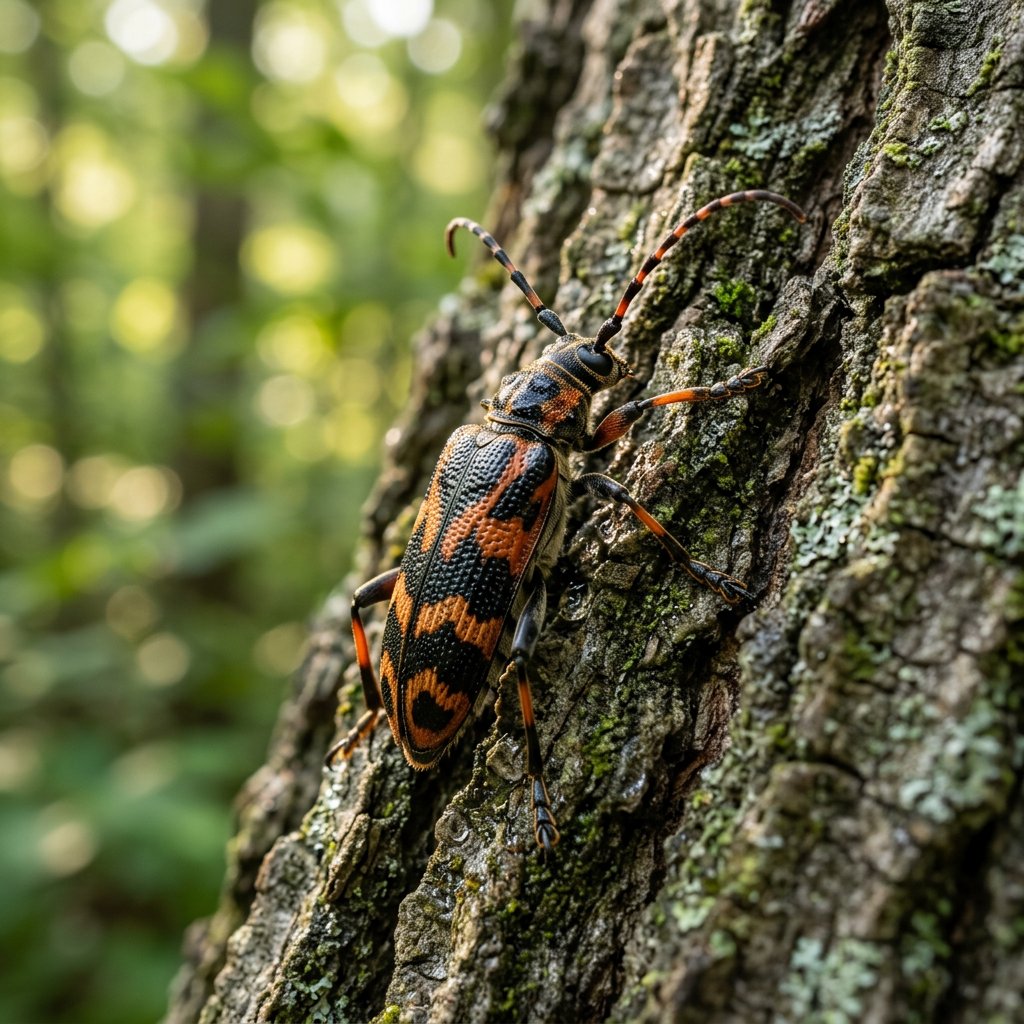
The Mesquite Borer (Placosternus erythropus) is a striking beetle that is a master of biological trickery. Often mistaken for a large wasp due to its bold yellow stripes and jerky movements, this "longhorn" beetle is actually a harmless pollinator of the desert. In the arid landscapes of the American Southwest and Mexico, it plays a vital role in recycling old wood and decorating wildflowers.
🔍 How to Identify
- 🐝 Wasp Mimicry: The body is jet black with bright, golden-yellow horizontal bands that mimic the warning colors of a stinging wasp to scare off hungry birds.
- 🪵 Long Antennae: As a member of the Cerambycidae family, it sports long, segmented antennae that can be as long as its body, used to "smell" the desert air.
- 👠 Reddish Legs: Its species name, erythropus, literally translates to "red-footed," referring to its distinctively rusty or reddish-orange legs.
🌲 Habitat & Ecology
- 🌵 Mesquite Specialist: As the name suggests, this beetle is most often found on or near Mesquite trees. While the adults love the sun and flowers, the larvae spend their lives deep inside dead or dying mesquite wood.
- 🌻 Flower Power: You are likely to spot adults during the day clinging to goldenrods or desert blooms. They are active pollinators, fueling their flight by drinking nectar and eating protein-rich pollen.
- 🍂 Nature’s Recycler: By boring into fallen branches, the larvae help break down tough woody fibers, eventually returning nutrients to the parched desert soil.
⚠️ Safety & Toxicity
- ✅ Harmless Guest: Despite its "scary" wasp-like appearance, the Mesquite Borer has no stinger and is not venomous. It is a peaceful neighbor in your garden.
- 🤏 Gentle Handling: While it isn't aggressive, like most beetles with strong mandibles for wood, it may give a tiny, non-toxic "nip" if squeezed or handled roughly. It is perfectly safe for pets and children to observe from a distance.
✨ Fun Fact
The Mesquite Borer doesn't just look like a wasp—it acts like one too! When threatened, it will twitch its abdomen and fly with a loud, low-pitched buzz to perfect its "tough guy" wasp impression, even though it’s completely defenseless.
More Details








