Info
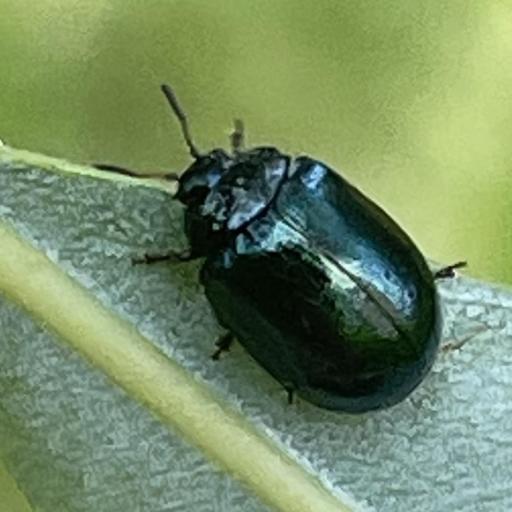
Often mistaken for a tiny piece of jewelry lost in the garden, the Imported Willow Leaf Beetle is a shimmering metallic visitor that calls willow trees home. While they look like precious gems reflecting the sunlight, these beetles are a "foe" to willow enthusiasts, known for their voracious appetite and ability to turn lush greenery into brown lace.
🔍 How to Identify
- 🪲 The Metallic Shell: They possess a brilliant, iridescent blue-green or bronze sheen that shifts colors as they move, much like a polished beetle wing earring.
- 🐢 Shape & Size: They are tiny and oval-shaped, usually only about 3-4 millimeters long, resembling a miniature, rounded shield.
- 🐛 The Grub Phase: Their larvae look very different from the adults; they are slug-like, dark-colored (almost black), and are usually found clustered together on the undersides of leaves.
🌲 Habitat & Ecology
- 🍃 The Willow Specialist: As their name suggests, they are almost exclusively found on various Willow (Salix) species. They are particularly fond of the Weeping Willow and the Corkscrew Willow, though they occasionally wander onto Poplars.
- 🍽️ Feeding Patterns: You can identify their presence by the damage they leave behind. Adults chew small, irregular holes through the leaves, while the larvae "skeletonize" the foliage, eating the soft tissue but leaving the veins intact.
- 🗺️ A Global Traveler: Originally from Europe and Asia, these beetles have become common across North America, often producing two to three generations in a single summer.
⚠️ Safety & Toxicity
- ✅ Status: Entirely harmless to humans and pets.
- 🛡️ No Sting or Bite: These beetles do not possess stingers, and their mandibles are far too small to pierce human skin. They are purely a garden pest rather than a physical threat.
- 🌿 Plant Impact: While they won't hurt you, a heavy infestation can be stressful for a young tree. If you see your willow turning brown in mid-summer, these shimmering "jewels" are likely the culprits.
✨ Fun Fact
- 🧪 Chemical Warfare: When threatened, the larvae of the Imported Willow Leaf Beetle can excrete a pungent-smelling chemical from special glands on their backs. This "stink" acts as a highly effective repellent against hungry ants and birds!
More Details








