Info
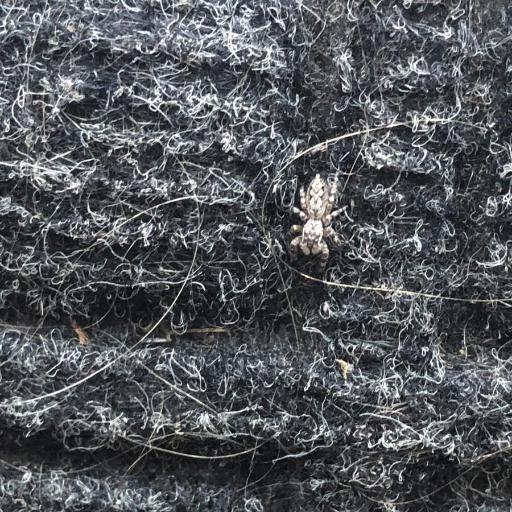
Commonly known as the Tan Jumping Spider, this charismatic little arachnid is a master of camouflage and curiosity. Unlike many of its shy relatives, it is famous for its "personable" behavior, often turning its head to look directly at humans with its large, expressive eyes. It is a frequent visitor to window sills and porch railings across North America, acting as a tiny, fuzzy guardian against pests.
🔍 How to Identify
- 👀 Large Primary Eyes: Two of its eight eyes are significantly larger and front-facing, providing the sharpest vision in the spider world for tracking prey.
- 🎨 Wavy Patterns: Its body is covered in a dense coat of tan, grey, and brown hairs, forming a distinct "undulating" or wavy pattern on the abdomen—which is how it earned its species name, undatus.
- 📏 Flattened Profile: It has a noticeably flatter body compared to other jumping spiders, an adaptation that allows it to squeeze into tight crevices in tree bark or house siding.
🏠 Habitat & Ecology
- 🕷️ The Active Stalker: These spiders are "prowling" hunters that do not build webs to catch food. Instead, they use their incredible depth perception to calculate a jump and pounce on flies or crickets with surgical precision.
- 🧵 The Bungee Cord: Before making a leap, they always anchor a silk "dragline" to their starting point. If they miss their target or fall, this safety tether prevents them from hitting the ground.
- 🌳 Bark Mimicry: In nature, they are almost invisible against shagbark hickory or oak trees. In suburban environments, they have successfully adapted to living on vertical surfaces like brick walls and wooden fences.
⚠️ Safety & Toxicity
- ✅ Friendly Neighbor: This spider is a "friend" to humans. They are extremely reluctant to bite and will almost always choose to jump away or hide if they feel threatened.
- 🐾 Low Risk: While they do possess venom (used to subduing insects), it is not medically significant to humans or pets. A bite, which only occurs if the spider is squeezed, is generally less painful than a common bee sting.
✨ Fun Fact
Unlike most spiders that rely on vibrations, the Tan Jumping Spider can actually see in high resolution and recognize different colors; they have even been observed "watching" television screens or following a laser pointer!
More Details








