Info
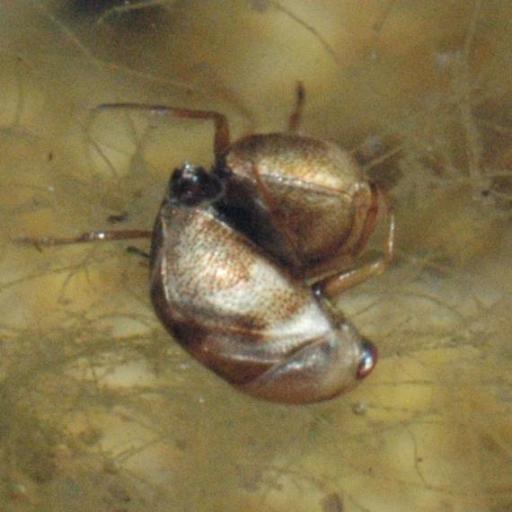
Meet the Pygmy Backswimmer, a tiny aquatic acrobat that literally turns the world upside down. Despite its miniature size—rarely exceeding 3 millimeters—this little bug is a fierce guardian of garden ponds, tirelessly hunting even smaller pests. Its scientific name, minutissima, perfectly captures its status as one of the smallest true bugs found in the water.
🔍 How to Identify
- 📏 Miniature Stature: It is exceptionally small, often appearing to the naked eye as nothing more than a tiny, swimming grain of sand or a stray seed.
- 🛡️ Shield-like Shape: Its body is strongly arched (convex) and covered in tiny pits, giving it a sturdy, armored appearance similar to a microscopic beetle.
- 🛶 Oar-like Legs: While all its legs are used for crawling among plants, its hind legs are fringed with fine hairs, acting like miniature oars to propel it through the water.
- 👀 Prominent Eyes: It possesses relatively large, reddish-brown compound eyes that help it spot microscopic prey in the filtered light of a pond.
🌲 Habitat & Ecology
- 🌿 The Underwater Jungle: These insects are rarely found in open water; they prefer the safety of submerged plants like Hornwort or Watermilfoil, where they can anchor themselves while resting.
- 🦟 Natural Pest Control: As a dedicated predator, it feasts on water fleas (Daphnia) and very young mosquito larvae, making it a silent ally for gardeners looking to keep their water features healthy.
- 🔄 Backwards Living: True to its name, it spends almost its entire life swimming on its back. It carries a thin, silvery film of air (a "plastron") trapped against its belly, which allows it to breathe underwater for long periods.
⚠️ Safety & Toxicity
- ✅ Status: Entirely harmless to humans and pets.
- 💧 No Bite: While its much larger relatives (the Greater Backswimmers) are known to give a painful "nip" if handled, the Pygmy Backswimmer is far too small to pierce human skin.
- 🛡️ Ecosystem Role: They are non-invasive and serve as a vital food source for larger pond life like dragonfly nymphs and small fish.
✨ Fun Fact
These tiny bugs are underwater musicians! Both males and females can produce a faint chirping sound (stridulation) by rubbing their front legs against their heads. While humans usually need a hydrophone to hear it, it’s a loud and clear signal to other backswimmers in the pond "jungle."
More Details








