Info
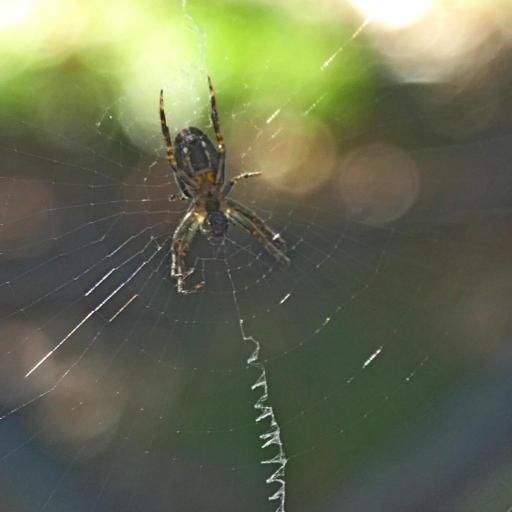
Commonly known as the Eastern Grass Orb-weaver, this small but architecturally gifted spider is a master of camouflage. Its species name, eburnus, is Latin for "ivory," referring to the beautiful, pale markings on its abdomen that look like hand-painted porcelain. Often found hiding in plain sight within gardens and tall grasses, it plays the role of a silent night watchman, patrolling the air for buzzing pests.
🔍 How to Identify
- ⚪ The Abdomen: Features a distinct creamy-white or ivory shield-shaped pattern on the upper side, often bordered by darker, wavy lines that resemble the veins of a leaf.
- 🦵 The Legs: They have relatively short, hairy legs that are usually light brown or reddish-orange with darker banding, designed for high-speed navigation across silk.
- 📏 The Size: This is a petite species; females are generally around 5–8mm, while the males are significantly smaller and more slender.
🌲 Habitat & Ecology
- 🕸️ Nocturnal Architects: These spiders are "night shift" workers. They spin a classic circular orb web at dusk to catch moths and flies, but they are famous for tearing the web down and eating the silk at dawn to recycle the proteins.
- 🍃 The Secret Retreat: During the day, you won't find them sitting in the center of a web. Instead, they hide in a "retreat"—usually a curled leaf or a silken tent at the edge of the web—holding a single "signal line" to feel for vibrations.
- 🇦🇺 Native Range: They are most commonly encountered in Australia, particularly along the Eastern coast, where they thrive in tall grasses, shrubs, and suburban backyards.
⚠️ Safety & Toxicity
- ✅ Low Risk: The Eastern Grass Orb-weaver is a "friend" to gardeners. They are non-aggressive and will almost always choose to drop to the ground or hide rather than confront a human.
- 🩹 Mild Venom: While they do have venom to subdue their insect prey, it is not considered medically significant to humans or pets. A rare bite might cause minor local irritation, similar to a mosquito bite.
✨ Fun Fact
The Plebs eburnus is a master of sustainability! Because spinning silk is biologically "expensive," they consume their entire web every morning. They digest the old silk and reuse the amino acids to spin a brand-new, sticky web the very next evening.
More Details








