Info
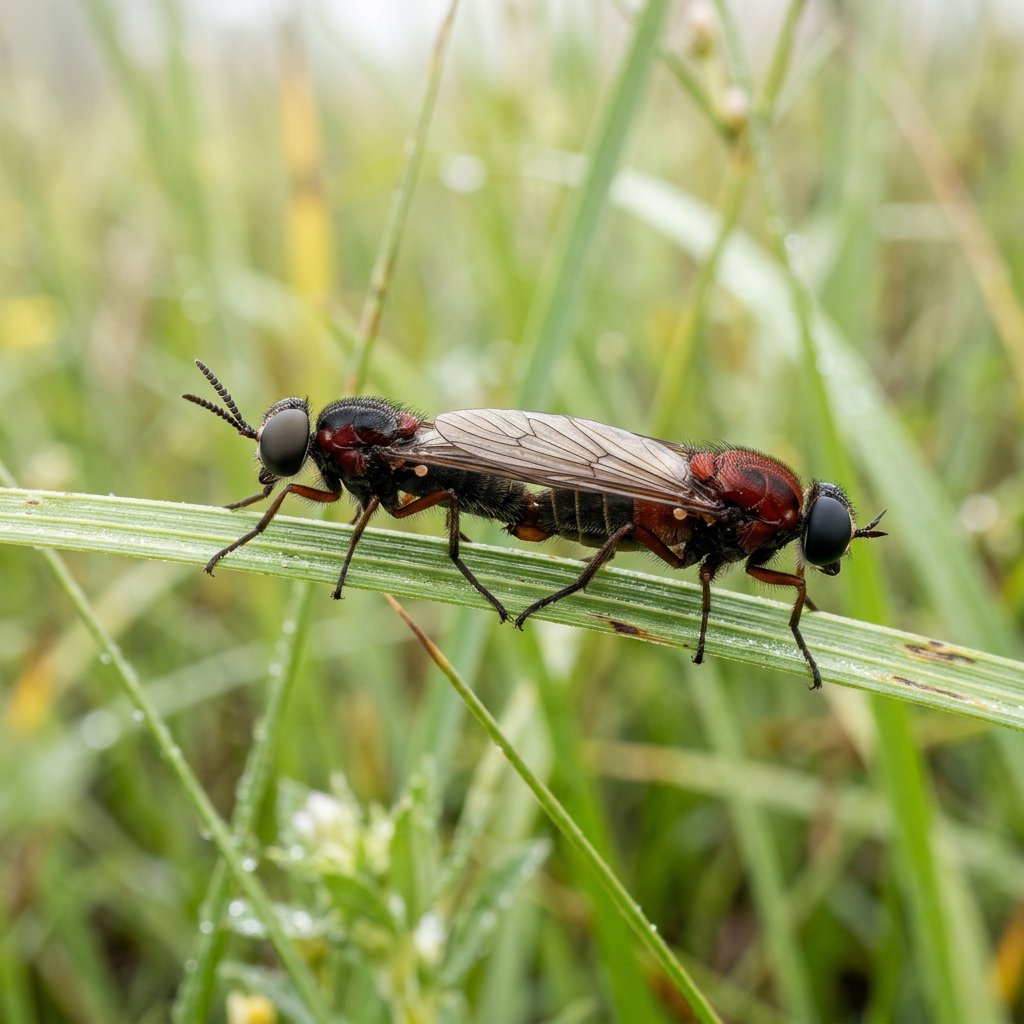
Often called the "Lovebug" or "Honeymoon Fly," Plecia nearctica is perhaps the most romanticized—and occasionally annoying—insect in the American South. You will rarely see one traveling solo; these small flies spend almost their entire adult lives literally joined at the hip. While their massive seasonal swarms can be overwhelming, they are gentle creatures that play a vital role in local ecosystems.
🔍 How to Identify
- 🐞 The Red Shield: Their most distinguishing mark is a bright reddish-orange "cape" or thorax, which stands out sharply against their otherwise jet-black, slender bodies.
- 🔗 Tethered Flight: They are most easily identified by their behavior. You will almost always see two individuals flying together, attached end-to-end at the abdomen.
- 🌫️ Smoky Wings: They possess dark, translucent wings that appear slightly "heavy" in flight, contributing to their slow, drifting movement through the air.
🌲 Habitat & Ecology
- 🍂 Nature's Recyclers: While the adults primarily drink nectar, the larvae are champions of the soil. They live in damp, grassy areas and feed on decaying vegetation, helping to recycle nutrients back into the earth.
- 🌬️ Highway Travelers: Lovebugs are famously attracted to heat and exhaust fumes. This is why you often see them in massive clouds near busy roads or congregating on light-colored houses and car bumpers.
⚠️ Safety & Toxicity
- 🛡️ Harmless to People: Despite their slightly menacing black-and-red color scheme, lovebugs are completely harmless. They do not bite, sting, or carry any diseases.
- 🚗 Threat to Paint: The "danger" of the lovebug is purely mechanical. Their body fluids are highly acidic. If they are crushed against a car and left in the hot sun, they can actually eat through the clear coat and damage your vehicle's paint within 24 hours.
- 🐾 Pet Safety: They are non-toxic to dogs and cats. If your pet accidentally eats one, the worst result is usually a bit of a bitter taste!
✨ Fun Fact
🧪 The Lab Myth: There is a persistent urban legend in Florida that lovebugs were "man-made" by University of Florida scientists as a botched experiment to kill mosquitoes. In reality, they are a completely natural species that migrated from Central America into the US on their own!
More Details








