Info
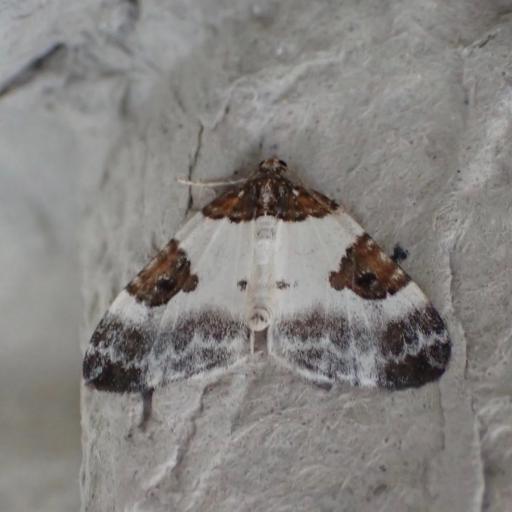
This delicate moth is a true gem of the night, often mistaken for a stray petal or a scrap of fine lace caught in the breeze. Known commonly as the Blue-bordered Carpet, it brings a touch of elegance to damp woodlands and garden edges across Europe and Asia. Despite the "carpet" in its name, this insect is a friend to the garden, preferring wild thickets over your living room rugs.
🔍 How to Identify
- 🦋 The Wings: The base color is a translucent, creamy white or "milky" tone, which gives the moth a ghostly appearance when it flutters through the shadows.
- 🌑 The Border: A distinctive smoky, lead-blue or dark grey band runs along the outer edge of the forewings, providing a sharp, sophisticated contrast to the pale interior.
- 📍 Central Markings: Look for a prominent dark brown or bluish-grey "thumbprint" patch near the top edge of the wing, often accompanied by a tiny, pinpoint dot in the very center.
🌲 Habitat & Ecology
- 🌳 The Menu: The larvae (caterpillars) are leaf-fliers that specialize in deciduous trees. You are most likely to spot this moth near Alder, Birch, Blackthorn, or Hawthorn trees, which serve as the primary nurseries for their young.
- 🌙 Nocturnal Activity: While they are strictly nocturnal and frequently visit garden light traps, they are easily disturbed during the day. If you rustle a hedgerow and a small white shape zig-zags away, it might be a Blue-bordered Carpet looking for a quieter nap.
⚠️ Safety & Toxicity
- 🛡️ Status: Completely harmless. This moth does not bite, sting, or carry any toxins that are dangerous to humans or curious pets.
- 🚫 Textile Safe: Unlike the "clothes moths" that give the family a bad reputation, this species has zero interest in your wool sweaters or silk curtains. It is a wild inhabitant that stays outdoors to play its role in the local food web.
✨ Fun Fact
The term "Carpet Moth" has nothing to do with floor coverings! Early British naturalists thought the intricate, repetitive patterns on the wings of this family of moths looked like the ornate "Oriental" carpets that were popular in the 18th and 19th centuries.
More Details








