Info
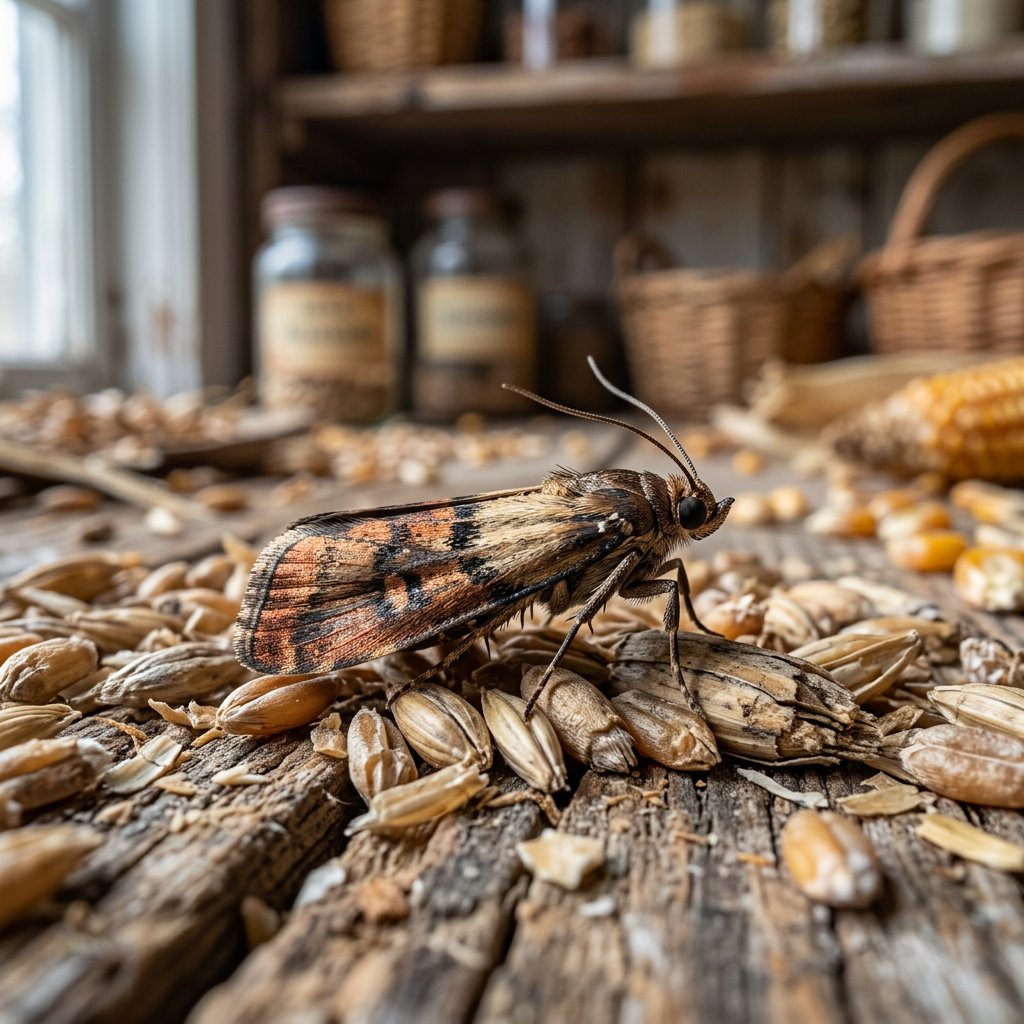
Commonly known as the Indianmeal Moth or the "Pantry Moth," this tiny hitchhiker is likely the most famous uninvited guest in kitchens worldwide. Despite its name, it isn't from India; it earned its moniker from an early American naturalist who found it feeding on "Indian corn" (maize). While they may look like simple dust motes fluttering near your ceiling, they are the ultimate survivalists of the dry goods aisle.
🔍 How to Identify
- 🦋 Two-Toned Wings: Their most distinctive feature is the coloring of the forewings; the third closest to the body is a pale gray or yellowish-white, while the outer two-thirds are a shimmering reddish-brown or bronze.
- 📐 Resting Shape: When sitting still, they fold their wings flat against their bodies in a narrow, rectangular or "roof-like" shape, often appearing much smaller than they actually are.
- 🧶 Tell-Tale Webbing: While the adults are easy to spot flying, you’ll identify an infestation by the larvae. Look for fine, silken webbing—similar to a spiderweb—clumping together flour, grains, or cereal inside bags.
🌲 Habitat & Ecology
- 🥣 The Ultimate Foodie: These moths are scavengers that thrive in dark, quiet places with a steady food supply. They are particularly fond of "dry" pantry staples like flour, pasta, rice, nuts, dried fruit, chocolate, and even dry pet food or birdseed.
- 📦 Master Hitchhikers: Most infestations don't start from an open window; they begin at the grocery store or processing plant. They are often brought into your home as microscopic eggs tucked inside sealed cardboard boxes or plastic bags.
⚠️ Safety & Toxicity
- 🛡️ Harmless Nuisance: The Indianmeal Moth does not bite, sting, or carry diseases. They are considered a "nuisance pest" rather than a medical threat.
- 🚫 Food Contamination: While accidentally eating a larva won't hurt you or your pets, they do spoil food with their silk webbing and waste (frass). If you find them, it is best to discard the affected food and vacuum the pantry corners to remove any hidden cocoons.
✨ Fun Fact
The Indianmeal Moth has an incredible sense of smell; males can detect the pheromones of a female from a significant distance, even through the tiny gaps in "sealed" Tupperware or plastic packaging!
More Details








