Info
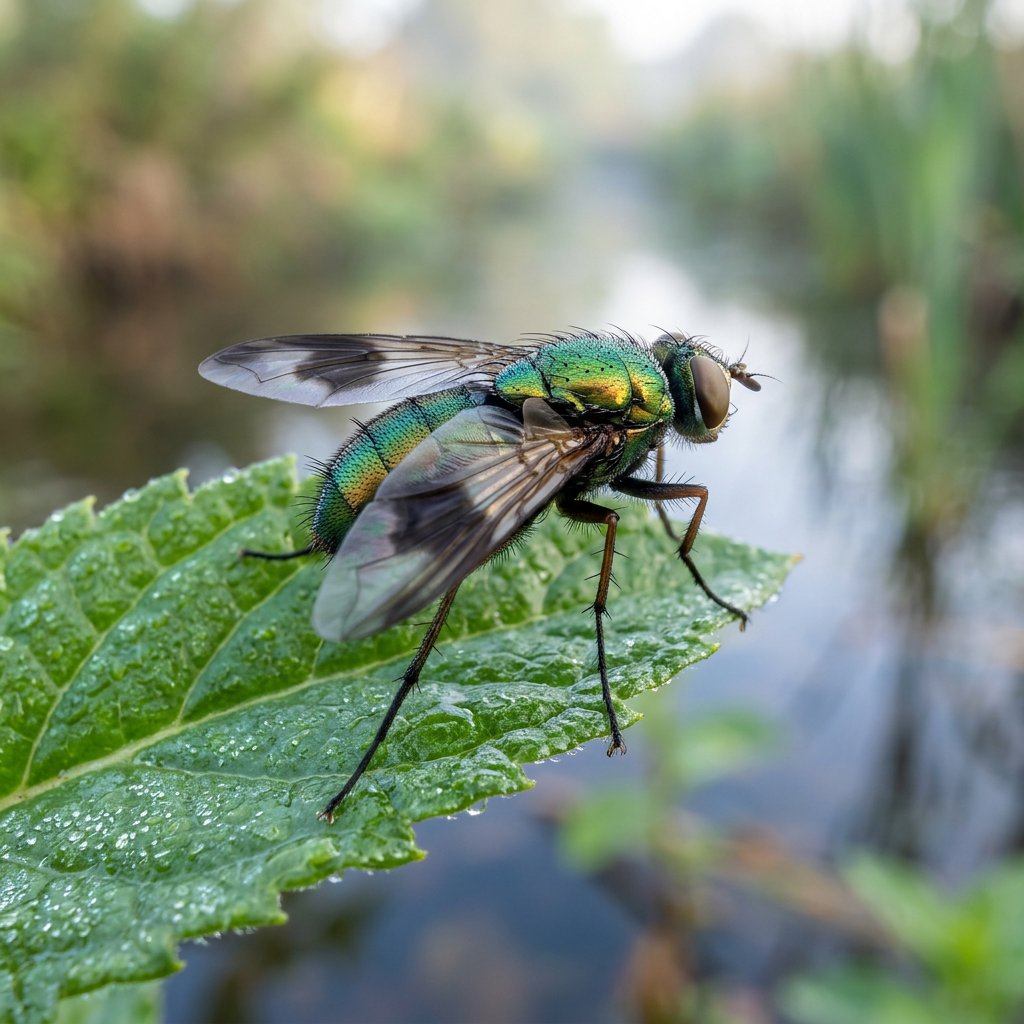
The Semaphore Fly, scientifically known as Poecilobothrus nobilitatus, is a tiny, shimmering showman of the wetlands. Often found dancing near the edges of ponds, this fly gets its nickname from the way males wave their white-tipped wings like signal flags to attract mates. It is a jewel-toned predator that proves even the smallest garden visitors can have big personalities.
🔍 How to Identify
- ✨ Metallic Sheen: A brilliant, iridescent green or bronzed body that glitters like a gemstone when hit by sunlight.
- 🏁 Wing Patterns: Large, smoky-dark wings. Males are easily spotted by the conspicuous, snowy-white patches at the very tips.
- 🦵 Stilt-like Legs: Long, slender legs typical of the "long-legged fly" family, which they use to stand high above damp mud or leaves.
🌲 Habitat & Ecology
- 💧 Waterfront Property: They are almost exclusively found near water, particularly around the muddy margins of ponds, ditches, or damp garden shadows.
- ⚔️ Miniature Predator: Don't let the "pretty" colors fool you; they are voracious hunters. They spend their days darting across mud to snatch up even smaller insects and larvae.
- 🕺 The Mating Dance: The males are famous for their "semaphore" display, flicking their white-tipped wings in a rhythmic dance to impress females and ward off rival males.
⚠️ Safety & Toxicity
- ✅ Completely Harmless: The Semaphore Fly is a friend to gardeners. They do not sting, they do not bite humans, and they do not carry the diseases associated with common houseflies.
- 🐾 Pet Safe: They are non-toxic and pose no threat to curious cats or dogs who might try to chase them near a pond.
✨ Fun Fact
The white tips on the male's wings are so bright that they act as high-visibility signals in the dim, shaded environments of riverbanks, ensuring they can be seen by potential mates even in low light!
More Details








