Info
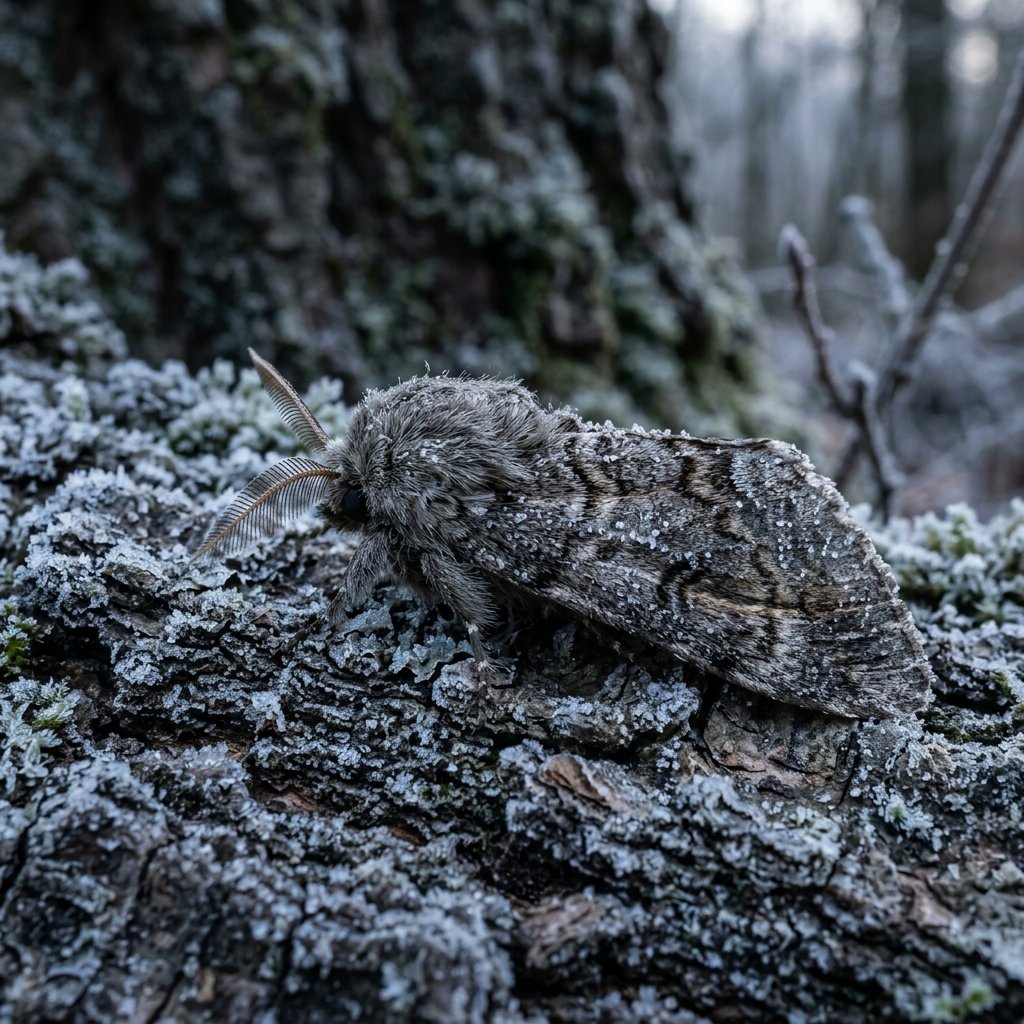
Often called the December Moth, this charcoal-colored flyer is a rare winter wonder. While most insects have tucked themselves away for the frost, this moth is just getting started, emerging when the nights are at their coldest and darkest. Its scientific name hints at its love for poplar trees, though it is a frequent and welcome visitor to many woodland gardens.
🔍 How to Identify
- 🦋 Wing Texture: The wings have a smoky, dark-grey, and semi-translucent appearance, often looking like charcoal-dusted parchment.
- 🎨 Creamy Markings: Look for two pale, yellowish wavy lines crossing the forewings and a single matching line on the hindwings.
- 🧣 The "Fur Coat": The body is incredibly hairy, featuring a thick, pale yellow or cream-colored "collar" around its head that helps it retain heat in the freezing air.
🌲 Habitat & Ecology
- ❄️ The Winter Specialist: You won’t see these in the summer; they emerge specifically between October and December. They are nocturnal and are strongly attracted to artificial lights, which is why you might find one resting on your window or porch during a cold snap.
- 🍂 The Spring Buffet: While the adults are active in winter, their caterpillars hatch in the spring. They aren't picky eaters and will happily munch on the fresh leaves of Oak, Poplar, Hawthorn, and Birch trees.
⚠️ Safety & Toxicity
- 🛡️ Status: Completely Harmless.
- 🐾 Interaction: The December Moth is a "friend" to the gardener. They do not bite, sting, or carry toxins. They are perfectly safe to observe around curious pets and children, though their wings are very delicate and should not be touched.
✨ Fun Fact
⏳ Life Without Lunch: Adult December Moths do not have functioning mouthparts! They cannot eat or drink. They spend their entire adult life using up energy stored from their time as a caterpillar, living just long enough to find a mate and lay eggs before the winter ends.
More Details








