Info
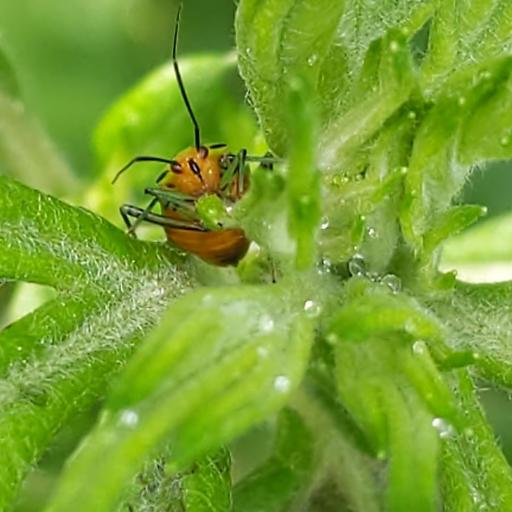
Meet the tiny racer of the garden world, the Four-lined Plant Bug. With its vibrant "racing stripes" and high-speed maneuvers, this insect looks like it belongs on a miniature track rather than a leaf. While gardeners often mistake the damage it leaves behind for a mysterious plant disease, this bug is a common—if slightly mischievous—visitor to flower beds and vegetable patches across North America.
🔍 How to Identify
- 🏁 The Racing Stripes: The most distinctive feature is the four jet-black longitudinal stripes running down its lime-green or bright yellow wing covers.
- 🎨 Nymph Colors: Before they reach adulthood, the young (nymphs) are a striking bright red or orange, lacking wings but already sporting a few dark spots on their abdomens.
- 📐 Body Shape: They have a classic "true bug" oval shape, measuring about 7 to 8 millimeters, with long antennae and prominent, dark eyes that give them an alert appearance.
🌲 Habitat & Ecology
- 🍽️ A Diverse Menu: This insect isn't a picky eater; it feeds on over 250 different plant species. You’ll frequently find it snacking on mint, basil, lavender, and even ornamental shrubs like Forsythia or Weigela.
- holes The "Stippling" Effect: Unlike beetles that chew edges, these bugs use needle-like mouthparts to inject enzymes and suck out plant juices. This results in small, sunken, square-shaped brown or clear spots on leaves that look like a localized wilt or fungus.
- 🏃 Garden Hide-and-Seek: They are incredibly shy and fast. If you approach a leaf where one is sitting, it will often scuttle to the underside or drop to the ground before you can get a good look.
⚠️ Safety & Toxicity
- ✅ Human Safety: These bugs are completely harmless to humans and pets. They do not bite, sting, or carry diseases that affect mammals.
- 🌿 Plant Impact: While they are technically "pests," the damage is almost entirely cosmetic. They rarely kill a healthy plant, though they can make your herbs look a bit ragged during their peak activity in late spring and early summer.
✨ Fun Fact
The Four-lined Plant Bug is a "one-and-done" species. They produce only one generation per year, appearing suddenly in May or June, doing their damage for about six weeks, and then disappearing until the following spring!
More Details








