Info
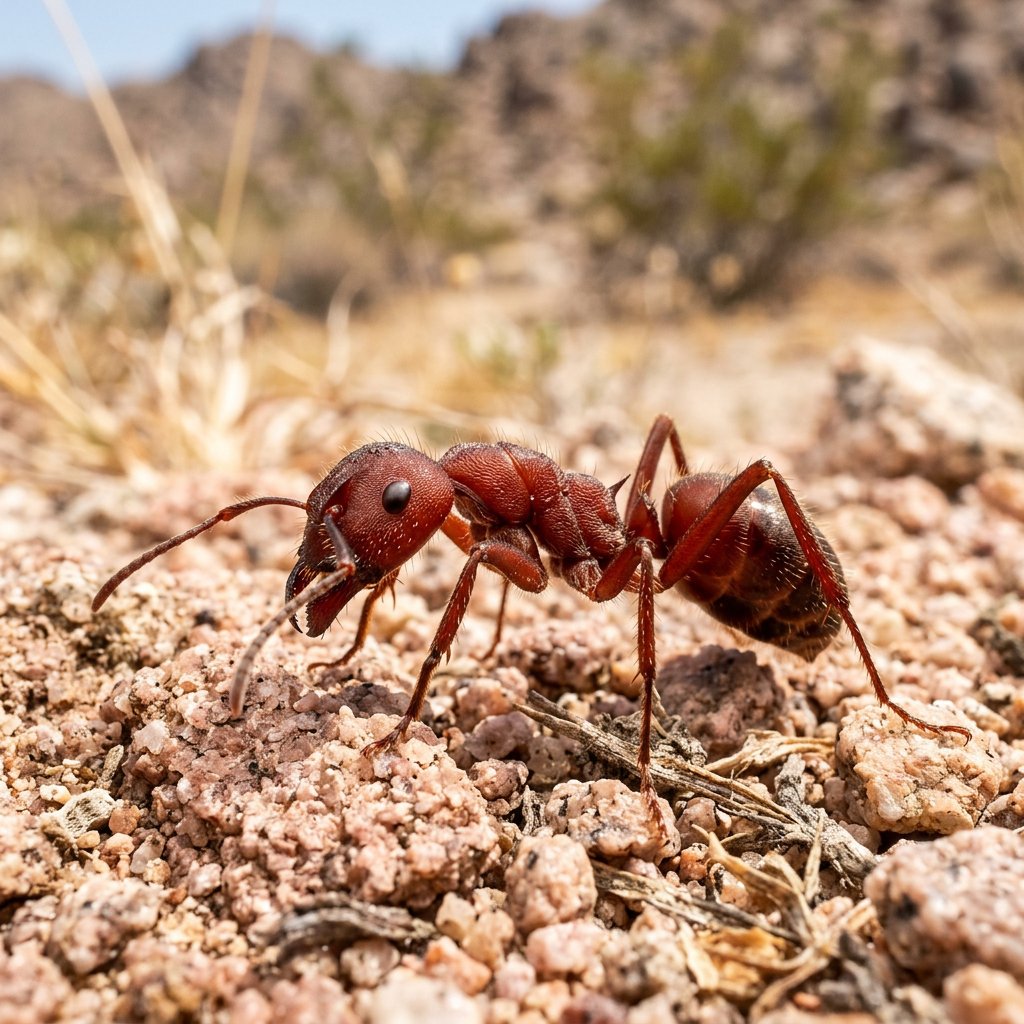
Known as the "California Harvester Ant," this industrious insect is a staple of the sun-drenched landscapes of the American Southwest. While they might look like typical backyard ants at a distance, they are highly specialized desert survivors famous for their organized "seed-gathering" expeditions. They are often seen as the tiny, red architects of the desert, though their formidable defensive sting commands a healthy dose of respect from hikers and gardeners alike.
🔍 How to Identify
- 🐜 Rusty Color: These ants typically sport a vibrant reddish-brown or "rusty" hue across their entire bodies, which helps them blend into sandy and clay-rich soils.
- 🧔 The "Beard": If you look closely (with a magnifying glass!), you’ll see long, curved hairs under their heads called a psammophore. They use this "beard" like a basket to carry fine sand and seeds.
- 🏰 The Clearing: Their nests are easy to spot; they create large, flat mounds of earth and meticulously clear away all grass and vegetation in a wide circle around the entrance to prevent predators from sneaking up.
🌵 Habitat & Ecology
- 🌾 Seed Collectors: Unlike many ants that scavenge for sugar or protein, these are "granivores." They spend their days harvesting seeds, which they store in underground granaries to survive lean times.
- 🏜️ Soil Engineers: By dragging seeds deep underground and clearing surface vegetation, they act as vital ecological engineers, aerating the soil and helping certain desert plants "travel" to new locations.
⚠️ Safety & Toxicity
- 🚫 Painful Sting: While not aggressive by nature, they will defend their mound fiercely. Their sting is widely considered one of the most painful of any North American ant, containing a potent venom designed to deter large mammals.
- 🐾 Keep Distance: Keep curious pets and children away from their cleared "disks" on the ground. If stung, the area may swell and throb for several hours. Seek medical attention only if an allergic reaction (difficulty breathing or widespread hives) occurs.
✨ Fun Fact
California Harvester Ants are remarkably long-lived for insects; while workers live for a few months, a single Queen can live for up to 20 to 30 years in her underground fortress!
More Details








