Info
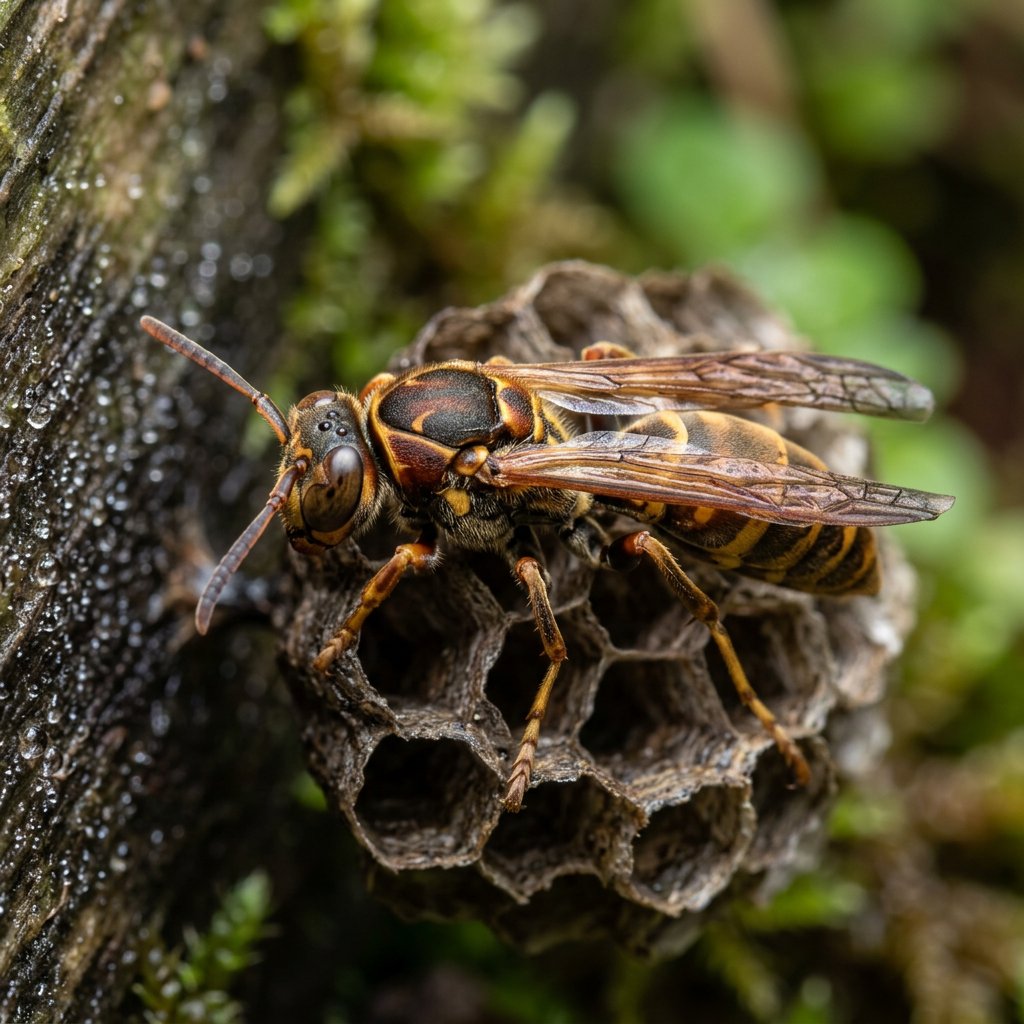
While the name might sound like a botanical specimen, Polistes chinensis—commonly known as the Asian Paper Wasp—is actually a highly social and industrious insect rather than a plant. These master architects are famous for their "umbrella" nests, which they meticulously craft from recycled wood fibers. Though they are often feared, they play a vital role in the ecosystem as both pollinators and pest controllers.
🔍 How to Identify
- 🐝 Body Shape: They possess a classic "wasp-waisted" silhouette, with a slender body that is more elongated and elegant than the stocky common yellowjacket.
- 🎨 Coloration: Their bodies are decorated with high-contrast yellow and black bands. Unlike some cousins, their faces often feature distinct yellow markings that help them identify one another.
- 🦵 Flight Style: A key giveaway is their flight; they fly with their long, spindly legs dangling gracefully beneath them, rather than tucked up against their abdomen.
🌲 Habitat & Ecology
- 🏗️ Paper Nests: They build "open-faced" nests—meaning the hexagonal cells are visible and not enclosed in a paper shell. You’ll often find these hanging from eaves, window frames, or sturdy plant stems.
- 🐛 Natural Pest Control: These wasps are the "lions" of the garden. They hunt caterpillars and beetle larvae to feed their young, making them an excellent (and free) organic pest control service for your vegetables.
- 🌸 Dietary Habits: While the larvae eat meat, the adults prefer high-energy snacks like nectar and honeydew, accidentally assisting in the pollination of various flowers as they forage.
⚠️ Safety & Toxicity
- 🛡️ Defensive Behavior: Polistes chinensis is generally non-aggressive when foraging. However, they are fiercely protective of their home and will sting if the nest is disturbed or handled.
- 💉 The Sting: The sting is sharp and painful, often causing immediate redness and swelling. Unlike honeybees, they can sting multiple times because their stinger is smooth and does not tear away.
- 🚫 Allergy Risk: For most, the sting is a temporary nuisance, but for individuals with wasp venom allergies, it can be life-threatening. Seek medical attention immediately if you experience dizziness or difficulty breathing.
✨ Fun Fact
- These wasps are surprisingly smart! Research has shown that Polistes species can actually recognize and remember the individual "faces" of other wasps in their colony, helping them maintain a strict social hierarchy.
More Details








