Info
Known affectionately as the "Common Paper Wasp" of the tropics, Polybia occidentalis is a tiny architect with a big social life. Found throughout Central and South America, these wasps are famous for their complex, multi-layered paper nests that look like delicate works of art hanging from trees. While their presence might make a gardener nervous, they are actually tireless "security guards" that protect plants from hungry caterpillars.
🔍 How to Identify
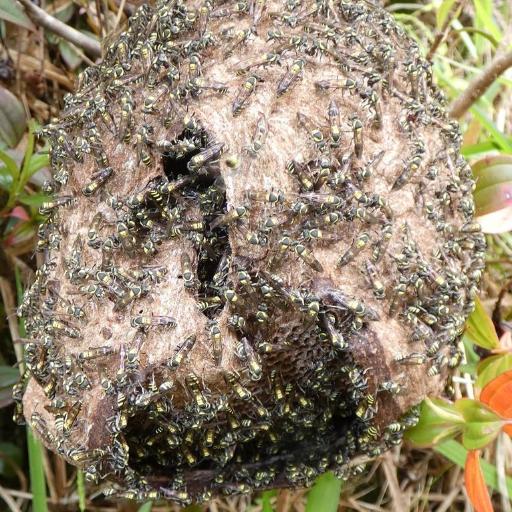
- 🐝 Compact Body: Unlike the long, dangling legs of some wasps, these are relatively small (about 10-12mm) and have a sleek, compact silhouette.
- 🎨 Color Pattern: They feature a dark brownish-black base accented with bright yellow bands across the abdomen and thorax, making them quite easy to spot against green leaves.
- 🏗️ The Nest: Their most recognizable feature isn't their body, but their home—a multi-chambered "envelope" nest made of chewed wood fibers that looks like a sturdy, grey paper lantern.
🌲 Habitat & Ecology
- 🐜 Expert Hunters: These wasps are beneficial predators. They spend their days hunting small caterpillars and soft-bodied insects to feed their larvae, acting as a natural form of pest control for your garden.
- 🌸 Sugar Seekers: When they aren't hunting, adults visit flowers for nectar. This makes them secondary pollinators, helping your flowers thrive while they fuel up for their next flight.
- 🤝 Strength in Numbers: They are "swarm-founding" wasps, meaning that when a colony gets too big, a group of workers and several queens leave together to start a new home, much like honeybees.
⚠️ Safety & Toxicity
- 🛡️ Defensive Nature: While they are not naturally aggressive foragers, they are fiercely protective of their nest. If you get too close or vibrate their branch, they will defend their home in large numbers.
- 💉 The Sting: Their sting is painful—often described as a sharp, burning sensation—but it is generally not dangerous to humans unless you have a specific wasp-venom allergy.
- 🐾 Pet Safety: Keep curious dogs or cats away from low-hanging nests; multiple stings can be much more serious for smaller animals than for humans.
✨ Fun Fact
Polybia occidentalis has a remarkable memory! Research has shown that these wasps can remember the specific locations of many different food sources and navigate back to their nest using visual landmarks, proving that you don't need a big brain to be a master navigator.
More Details








