Info
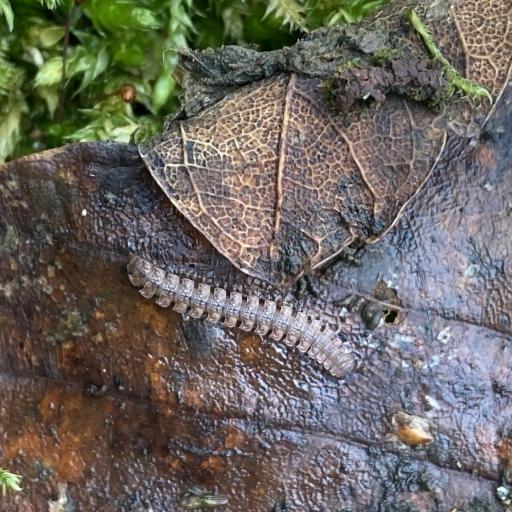
Often referred to as the Flat-backed Millipede, Polydesmus angustus looks like a tiny, bronze-armored relic from a prehistoric era. Unlike the cylindrical millipedes that resemble smooth sausages, this species is elegantly flattened, making it a master of squeezing into tight crevices. It is a vital member of the "clean-up crew" in gardens, quietly turning fallen leaves into liquid gold for your plants.
🔍 How to Identify
- 🛡️ Body Shape: Distinctly flattened appearance with 20 segments that have "wings" or lateral extensions (paranota), giving it a ridged, rectangular silhouette.
- 🦵 Leg Count: As a true millipede, it carries two pairs of legs on most of its body segments, which move in a rhythmic, wave-like motion.
- 🎨 Coloration: Typically ranges from a dull reddish-brown to a deep chocolate tan, often with a slightly translucent or "matte" texture that helps it blend into the soil.
🌲 Habitat & Ecology
- 🍂 The Recycler's Diet: This millipede is a detritivore, meaning it feeds almost exclusively on decaying organic matter. It plays a crucial role in the ecosystem by breaking down tough leaf litter and woody debris into nutrient-rich humus.
- 🌑 Moisture Seekers: Because they lack a waxy waterproof layer on their exoskeleton, they are highly prone to drying out. You will almost always find them in damp, dark places—under rotting logs, beneath flower pots, or buried deep in mulch.
- 🐌 Gentle Nature: Unlike centipedes, which are fast-moving predators, the Flat-backed Millipede is slow, methodical, and completely herbivorous. It will never chase other bugs; it prefers a quiet life in the compost pile.
⚠️ Safety & Toxicity
- 🛡️ Status: Generally harmless to humans and pets, but they do have a unique chemical defense.
- 🧪 The Almond Scent: When threatened, they can secrete a tiny amount of liquid containing hydrogen cyanide. It smells distinctly like bitter almonds or marzipan. While this is enough to deter a bird or a spider, it is not dangerous to humans. However, you should wash your hands after handling them to avoid eye irritation.
- 🌱 Garden Impact: They are "friends" to gardeners. They rarely touch living plants, preferring to wait until the foliage has begun to rot.
✨ Fun Fact
If you gently pick one up and it feels threatened, give it a sniff! That "marzipan" aroma is a classic trait of the Polydesmidae family—it’s nature’s way of saying "I might look like a snack, but I taste like a chemical lab!"
More Details








