Info
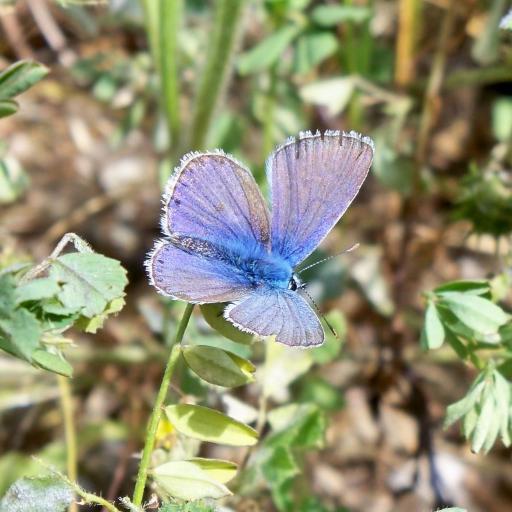
The Celina Blue (Polyommatus celina) is a delicate, sun-loving jewel of the Mediterranean. Often mistaken for its famous cousin, the Common Blue, this tiny butterfly is a "friend" to any garden, acting as a gentle pollinator. It spent decades hiding in plain sight, as scientists only recently discovered it was a distinct species through modern DNA testing.
🔍 How to Identify
- 🦋 The "Boy" Blue: Males sport vibrant, iridescent violet-blue wings on top, finished with a very thin, crisp black border.
- 🍂 The "Girl" Brown: Females are typically chocolate-brown on top, often dusted with a sprinkle of blue scales near the body and decorated with a row of orange spots along the wing edges.
- 🎨 The Underside Pattern: When resting with closed wings, you’ll see a pale grey or beige background decorated with black "eye-spots" ringed in white and a distinctive row of bright orange crescents.
🌲 Habitat & Ecology
- 🌞 Sun Seeker: You will find the Celina Blue dancing over warm, flowery grasslands, coastal dunes, and open scrublands where the sun hits the ground directly.
- 🌱 The Nursery: The caterpillars are quite picky eaters, favoring plants from the pea family (Fabaceae), such as Bird’s-foot Trefoil and various clovers.
- 🤝 Ant Bodyguards: Like many blues, the larvae have a fascinating relationship with ants; they secrete a sugary liquid that ants love, and in exchange, the ants protect the caterpillars from predators.
⚠️ Safety & Toxicity
- ✅ Harmless Friend: The Celina Blue is completely safe. It does not bite, sting, or possess any chemical irritants.
- 🐾 Pet & Child Friendly: They are wonderful subjects for children to observe closely. They pose no threat to curious dogs or cats, though their fragile wings mean they should be watched with eyes rather than hands.
✨ Fun Fact
For over 100 years, this butterfly was considered the exact same species as the Common Blue (Polyommatus icarus). It wasn't until 2009 that researchers realized the butterflies in Southern Europe and North Africa were a "cryptic species"—genetically unique despite looking nearly identical to their northern relatives!
More Details








