Info
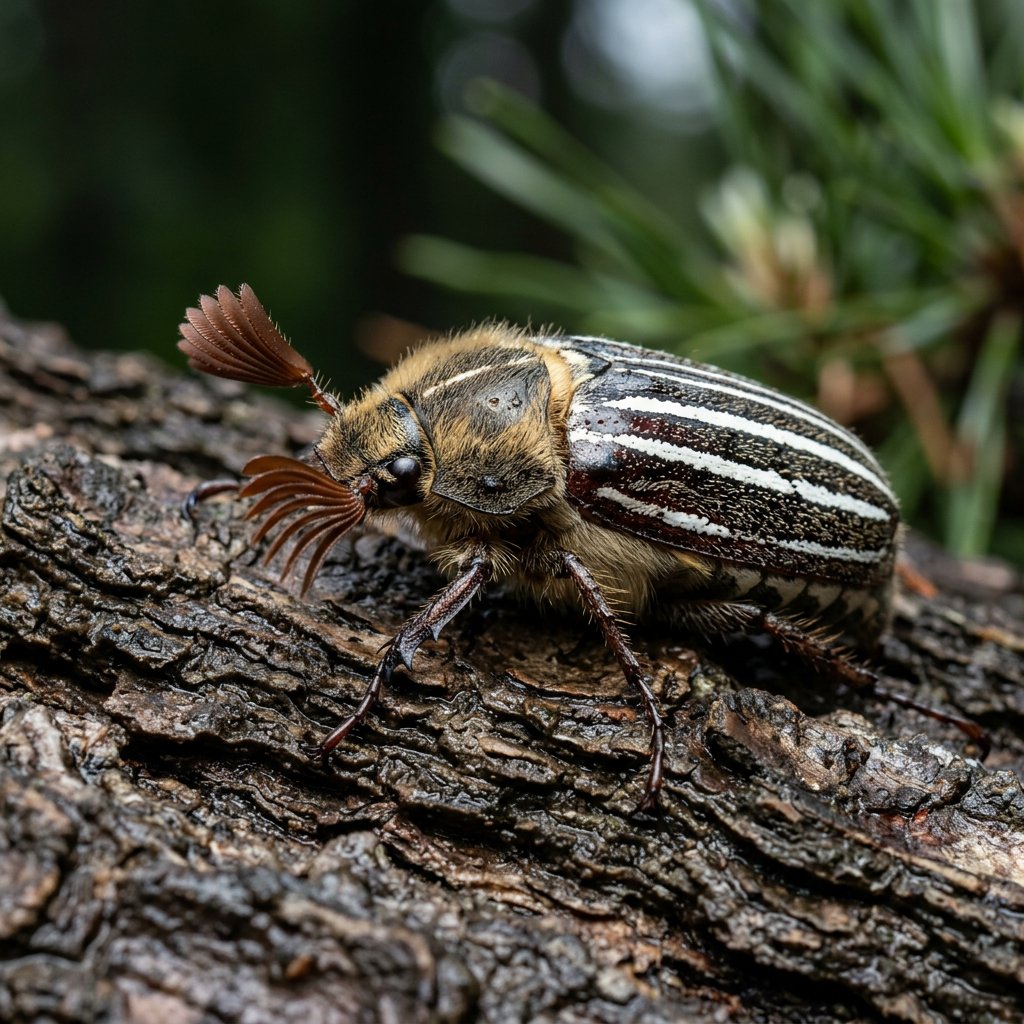
Often called the "Watermelon Beetle" due to its striking white-and-green pinstripes, the Ten-lined June Beetle is a gentle giant of the summer nights. While its large size and loud "hissing" might seem intimidating at first, this beetle is a harmless seasonal visitor across Western North America. It is most famous for its dramatic fan-like antennae and its tendency to crash-land near porch lights.
🔍 How to Identify
- 🪲 The Pinstripes: It features ten distinct white longitudinal stripes running down its brownish or olive-green wing covers (elytra).
- 📡 Leafy Antennae: Males possess large, spectacular "fanned" or leaf-like antennae that they can open and close like a deck of cards to "sniff" the air.
- 📏 Robust Size: These are "chunky" beetles, often growing up to 1.5 inches long, with a heavy, thumb-sized body.
🌲 Habitat & Ecology
- 💡 Night Owl: These beetles are strictly nocturnal and are famous for being "light-giddy." They are frequently found clinging to window screens or buzzing around outdoor lamps during mid-to-late summer.
- 🌲 The Conifer Connection: Adult beetles spend their short lives feeding on the needles of pine, spruce, and Douglas fir trees.
- 💨 The Hissing Defense: If you pick one up, it will likely "hiss" at you. This isn't a vocal cord sound; they produce it by pushing their abdomen against their wing covers to scare off predators.
⚠️ Safety & Toxicity
- 🛡️ Status: Completely harmless. They are non-toxic, do not possess a stinger, and are not known to bite humans.
- 🐾 Pet Safety: While they aren't toxic to pets, the hard, chitinous shell might cause a minor stomach upset if a curious dog or cat decides to swallow one.
- 🦶 Clingy Feet: Their legs have small hooks meant for gripping tree bark, which might feel "scratchy" or "sticky" on human skin, but they won't break the surface.
✨ Fun Fact
The male’s fan-shaped antennae are actually highly sensitive chemical receptors. They can detect the pheromones of a female beetle from a significant distance, navigating through the dark woods just to find a mate!
More Details








