Info
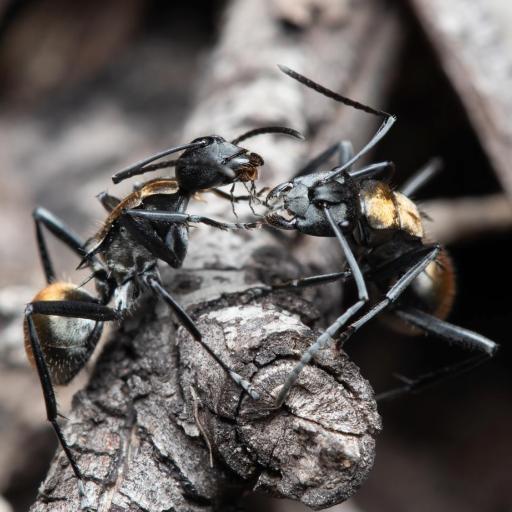
Known as the "Spiny Ants," members of the Polyrhachis genus look like they have just stepped out of a high-fantasy battle. These ants are famous for their elaborate, hook-like spines that protrude from their bodies, serving as a permanent suit of natural armor. Found predominantly in the tropical and subtropical regions of Asia, Australia, and Africa, they are the architectural geniuses of the ant world, often using silk to build their homes.
🔍 How to Identify
- ⚔️ Thoracic Spines: The most striking feature is the pair of sharp, often curved spines located on the back (thorax) and the waist (petiole). These make the ant very difficult for a predator to swallow.
- ✨ Metallic Sheen: Many species sport a beautiful, velvety coat of fine hairs that can appear golden, silver, or even slightly iridescent under direct sunlight.
- 🐜 Distinctive Waist: They have a single, high node (petiole) between the thorax and the abdomen, which often bears its own set of impressive spikes.
🌲 Habitat & Ecology
- 🧶 Master Weavers: Several species are "weaver ants." They don't produce silk themselves as adults; instead, they gently squeeze their own larvae, using them like "living glue sticks" to stitch leaves together into waterproof nests.
- 🌳 Arboreal Lifestyle: While some live in the soil, many Polyrhachis species are strictly arboreal, patrolling the canopy of trees to forage for nectar, small insects, and "honeydew" secreted by aphids.
⚠️ Safety & Toxicity
- 🛡️ Non-Stinging: Unlike many of their cousins, Spiny Ants do not possess a stinger. They rely almost entirely on their physical armor and chemical defenses for protection.
- 💧 Formic Acid: If you disturb a nest, they may bite with their mandibles and spray formic acid into the puncture. While this causes a temporary stinging or itchy sensation for humans, it is not medically significant.
- 🐾 Pet Safety: These ants are generally harmless to pets, though the sharp spines could cause minor mouth irritation if a curious dog or cat tries to eat one.
✨ Fun Fact
Some species of Polyrhachis are "swimming ants." In the mangroves of Australia, Polyrhachis sokolova can actually swim and dive underwater to escape predators or navigate the tides, nesting inside water-logged logs that are submerged for hours at a time!
More Details








