Info
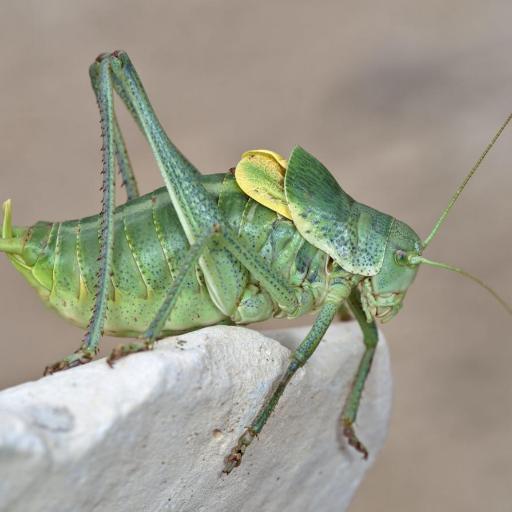
Known as the Greater Saw-tailed Bush-cricket, this fascinating insect is often mistaken for a dangerous creature due to its imposing appearance and dramatic "tail." Far from being a stinging monster, it is a gentle, herbivorous giant of the meadow, known for its rhythmic, mechanical-sounding songs that dominate late summer evenings.
🔍 How to Identify
- 🦗 Body Shape: A large, robust, and bulky insect, usually sporting a vibrant green or brownish coloration that allows it to blend perfectly into tall grass.
- ⚔️ The "Saw" Tail: Females possess a long, sword-like ovipositor that is serrated at the tip, which they use to slice into plant stems to lay their eggs. Despite looking like a formidable stinger, it is physically incapable of piercing human skin.
- 🪽 Wing Structure: The wings are relatively short and rounded, often not fully covering the abdomen, which gives them a slightly "stout" and flightless appearance compared to other bush-crickets.
🌲 Habitat & Ecology
- 🌾 Field Dwellers: You are most likely to spot these crickets in high-grass meadows, scrublands, and forest edges where they feed on a variety of grasses and soft plant tissues.
- 🌡️ Temperature Sensitivity: They are "sun-worshippers" that rely on warm, open environments. Their activity levels and the intensity of their song are directly tied to the ambient temperature of the meadow.
⚠️ Safety & Toxicity
- 🛡️ Status: Harmless. Despite the intimidating name and the sharp-looking ovipositor, the Greater Saw-tailed Bush-cricket is completely benign to humans and pets.
- ✋ Interaction: While they are not aggressive, they may bite if grabbed tightly in a hand. It is always best to observe these creatures in their natural habitat rather than handling them, to avoid stressing the insect or accidentally damaging their delicate limbs.
✨ Fun Fact
The "song" of the male Polysarcus denticauda is so high-pitched and rhythmic that it has been described as sounding like a tiny, broken clock or a rhythmic ticking. Because they are heavy-bodied and prefer not to fly, males will often climb to the highest point of a blade of grass to amplify their song, hoping to attract a female from across the meadow.
More Details








