Info
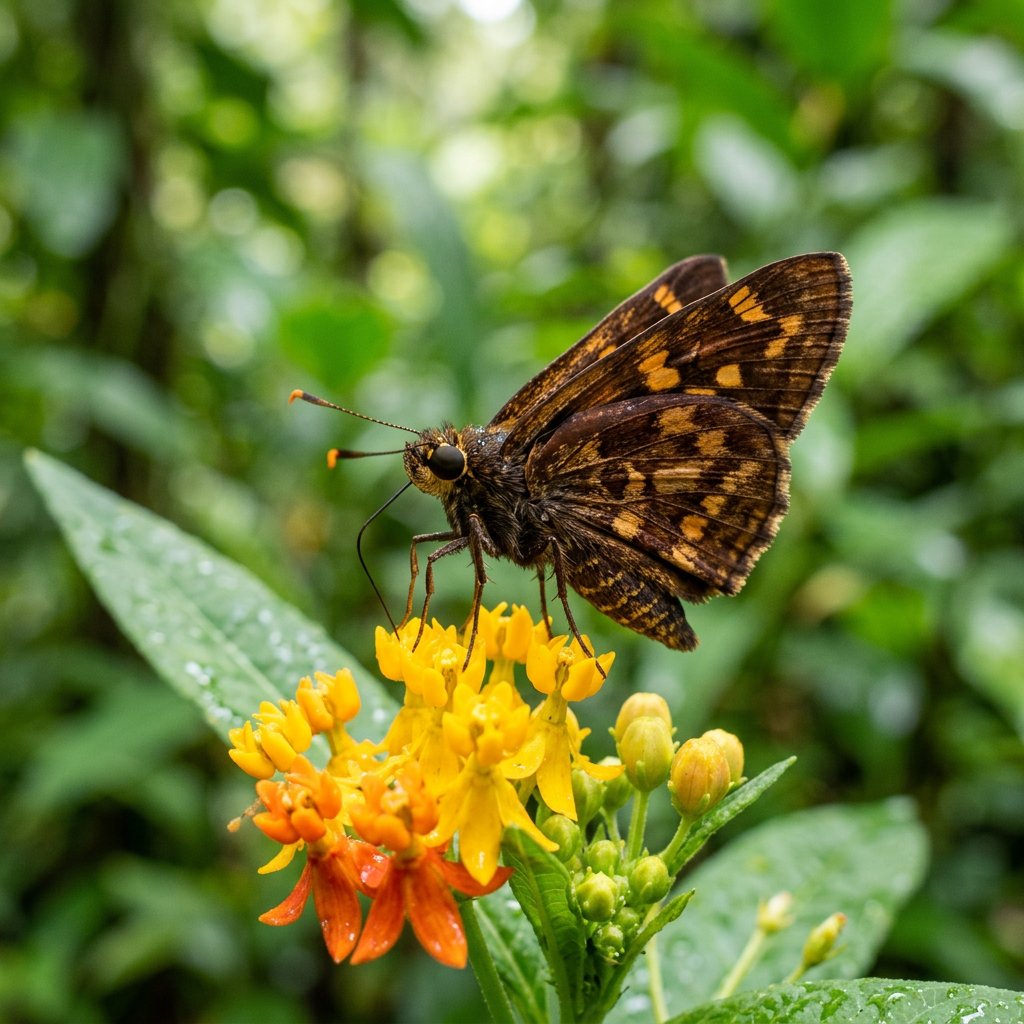
Commonly known as the Little Glassywing (specifically Pompeius verna), these small, energetic butterflies are the acrobats of the grass world. Often mistaken for moths due to their stout, fuzzy bodies and earthy colors, they are actually "true" butterflies belonging to the Skipper family. They are undisputed "friends" to the gardener, serving as tireless pollinators that zip between wildflowers with lightning speed.
🔍 How to Identify
- 🪟 Glassy Windows: The wings are typically a deep, chocolate brown, but look closely for a series of small, translucent white spots on the forewings that look like tiny panes of glass.
- 🧶 Moth-like Build: Unlike the slender bodies of Monarchs, the Pompeius has a thick, muscular, and very hairy thorax, which helps them generate the heat needed for their rapid flight.
- 🎣 Hooked Antennae: Their antennae are widely separated at the base and end in tiny, recurved hooks (called apiculi), a signature trait that distinguishes skippers from other butterflies.
🌲 Habitat & Ecology
- 🌾 The Grassland Connection: You will most likely find them near damp meadows or wood edges. Their caterpillars are "grass specialists," feeding on various species of purpletop and other field grasses where they build silk-lined shelters.
- 🧪 Nectar Junkies: Adults are high-energy flyers and require constant refueling. They are particularly fond of purple and pink flowers, such as peppermint, milkweed, and dogbane, often staying perfectly still while feeding to conserve energy.
⚠️ Safety & Toxicity
- ✅ Harmless: The Pompeius skipper is entirely safe. They do not bite, sting, or carry any toxins that are harmful to humans.
- 🐶 Pet Friendly: They are non-toxic to cats and dogs. In fact, their fast, darting flight might provide some harmless entertainment for a curious pet in the backyard.
✨ Fun Fact
Skippers are named for their "skipping" flight pattern, but they have a unique resting pose often called the "jet plane" position. They hold their hindwings flat and their forewings at a 45-degree angle, making them look like a tiny fleet of fighter jets parked on a leaf!
More Details








