Info
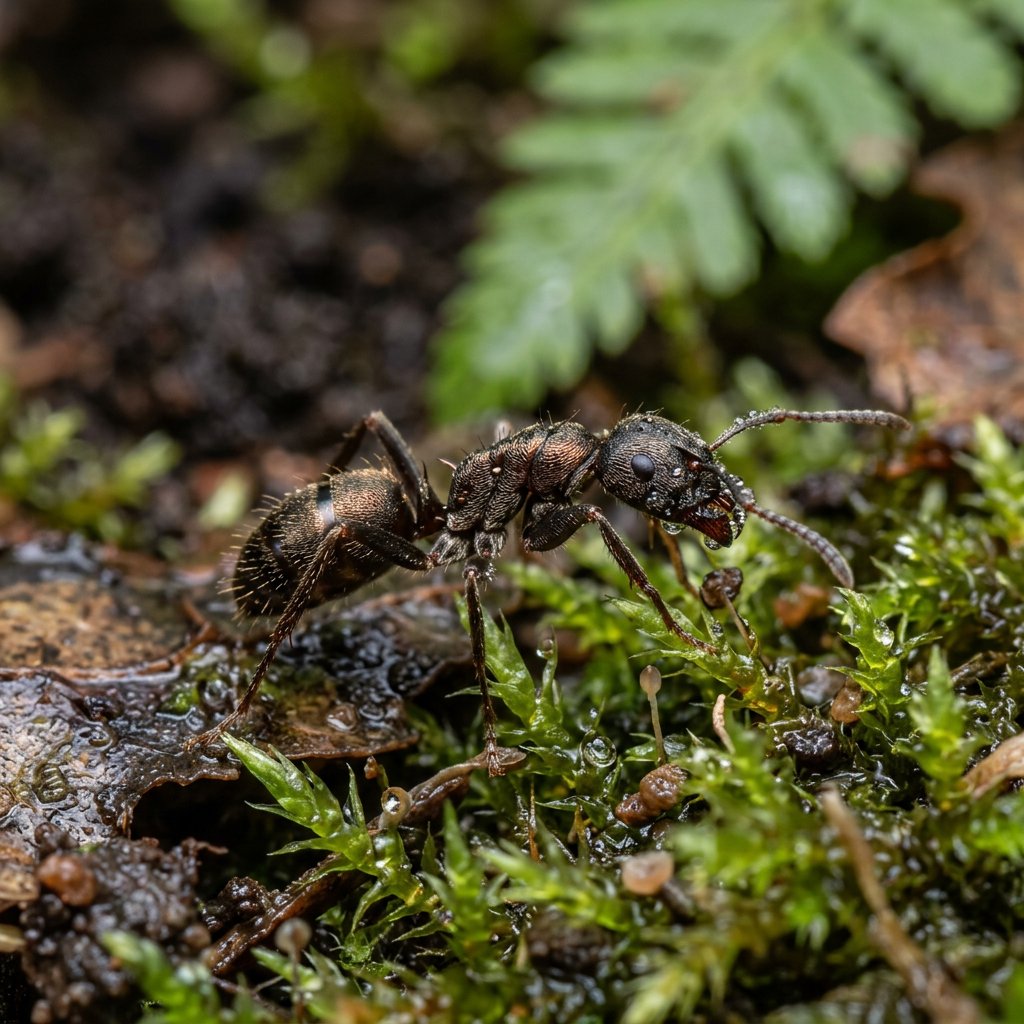
Known as "Small Ponerine Ants," these tiny excavators are the quiet ninjas of the insect world. Often referred to as "primitive ants," they belong to a lineage that has changed very little over millions of years. Unlike the swarming ants that invade picnics, Ponera species are cryptic, solitary-minded hunters that prefer the cool, damp shadows of the earth's "basement."
🔍 How to Identify
- 🐜 Abdominal Constriction: Look for a very distinct "pinch" or segment between the first and second parts of their abdomen (the gaster), which gives them a slightly segmented, prehistoric look.
- 🪵 Cylindrical Build: Their bodies are remarkably narrow and straight, designed specifically for maneuvering through tight subterranean tunnels and cracks in rotting wood.
- 🕵️ Tiny Stinger: Unlike many common ants that spray acid, Ponera ants possess a visible, functional stinger at the tip of their tail used for subduing prey.
🌲 Habitat & Ecology
- 🍂 Leaf Litter Specialists: You won't find these ants building large mounds in the sun; they live almost exclusively in moist soil, leaf litter, or inside well-decayed logs.
- 🕷️ The Tiny Predator: They are strict carnivores. They spend their lives hunting even smaller soil-dwelling creatures like springtails and mites, acting as essential "pest control" for the microscopic world.
- 🏠 Small Communities: While some ant colonies have millions of members, a Ponera colony is an intimate affair, often consisting of fewer than 100 individuals.
⚠️ Safety & Toxicity
- 🐝 Mild Sting: While they do have a stinger, they are not aggressive toward humans. Because they are so small (usually 2–4mm), a sting feels like a tiny, momentary prick, similar to a sharp hair splinter.
- 🛡️ Non-Invasive: They pose no threat to your home or pantry. They require high humidity to survive and will quickly perish if they wander onto dry indoor flooring.
✨ Fun Fact
Ponera ants are often called "socially primitive." Unlike "higher" ants that use complex pheromone trails to talk to each other, Ponera workers are much more independent and frequently hunt for food entirely on their own without calling for backup!
More Details








