Info
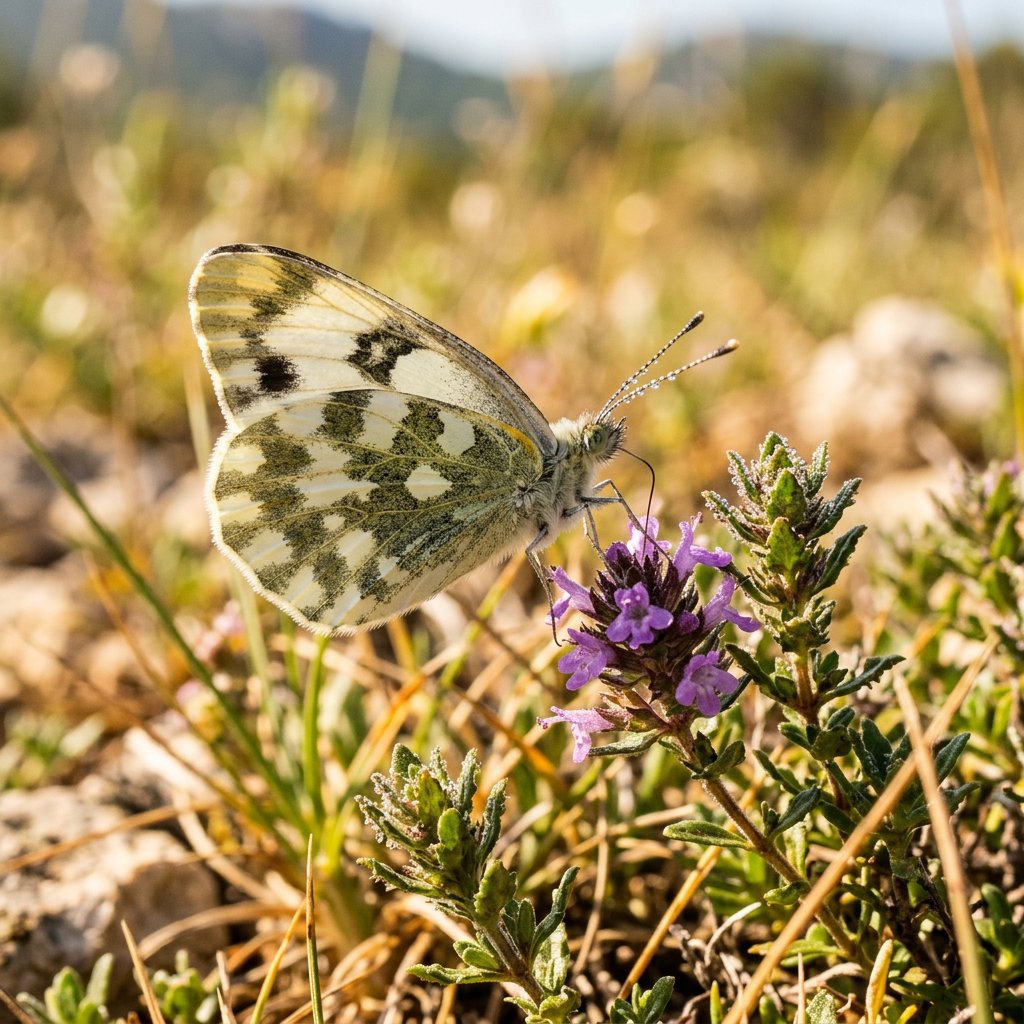
Known as the Bath White, this butterfly is a restless traveler of the Old World. Its charming name allegedly stems from a 17th-century piece of needlework created in Bath, England, which depicted the insect. While it looks like a delicate scrap of paper floating in the wind, it is actually a hardy migrant capable of crossing mountain ranges and seas to find sunny meadows.
🔍 How to Identify
- 🏁 The Upper Wings: The top surface is mostly ivory-white, featuring distinct black patches at the tips (apices) and a prominent black spot in the center of the forewing.
- 🎨 The "Marble" Underside: When the wings are closed, you’ll see a stunning mosaic of moss-green and yellowish-grey marbling against a white background, providing perfect camouflage among leaves.
- 📏 Size and Shape: It is a medium-sized butterfly with a somewhat "squarer" wing shape compared to the more rounded Common White.
🦋 Habitat & Ecology
- ☀️ Sun-Drenched Landscapes: You will most likely spot the Bath White in dry, open spaces, such as coastal dunes, flowery grasslands, and even dusty wasteland or "brownfield" sites.
- 🥗 The Mustard Diet: Its caterpillars are quite picky, feeding almost exclusively on plants from the mustard family (Brassicaceae) and Wild Mignonette (Reseda lutea).
- 🚀 High-Speed Commuter: Unlike many garden butterflies that wander aimlessly, the Bath White flies with a very direct, purposeful, and rapid motion, often staying close to the ground.
⚠️ Safety & Toxicity
- ✅ Harmless Friend: This insect is completely safe for humans and pets. It does not bite, sting, or carry any toxins.
- 🌸 Gardener’s Ally: As a frequent visitor to wildflowers, it serves as an excellent secondary pollinator for your garden.
✨ Fun Fact
The Bath White holds a special place in history as the first butterfly ever to be officially recorded as a "migrant" in British entomological literature, with its first recorded sighting dating all the way back to 1702!
More Details








