Info
Known as the shimmering emerald of the garden, the Japanese Beetle is a "beautiful menace." While its metallic sheen is visually stunning, it is one of the most notorious invasive pests in North America, having arrived secretly in a shipment of iris bulbs over a century ago. It is a social eater that turns lush gardens into lacy skeletons overnight.
🔍 How to Identify
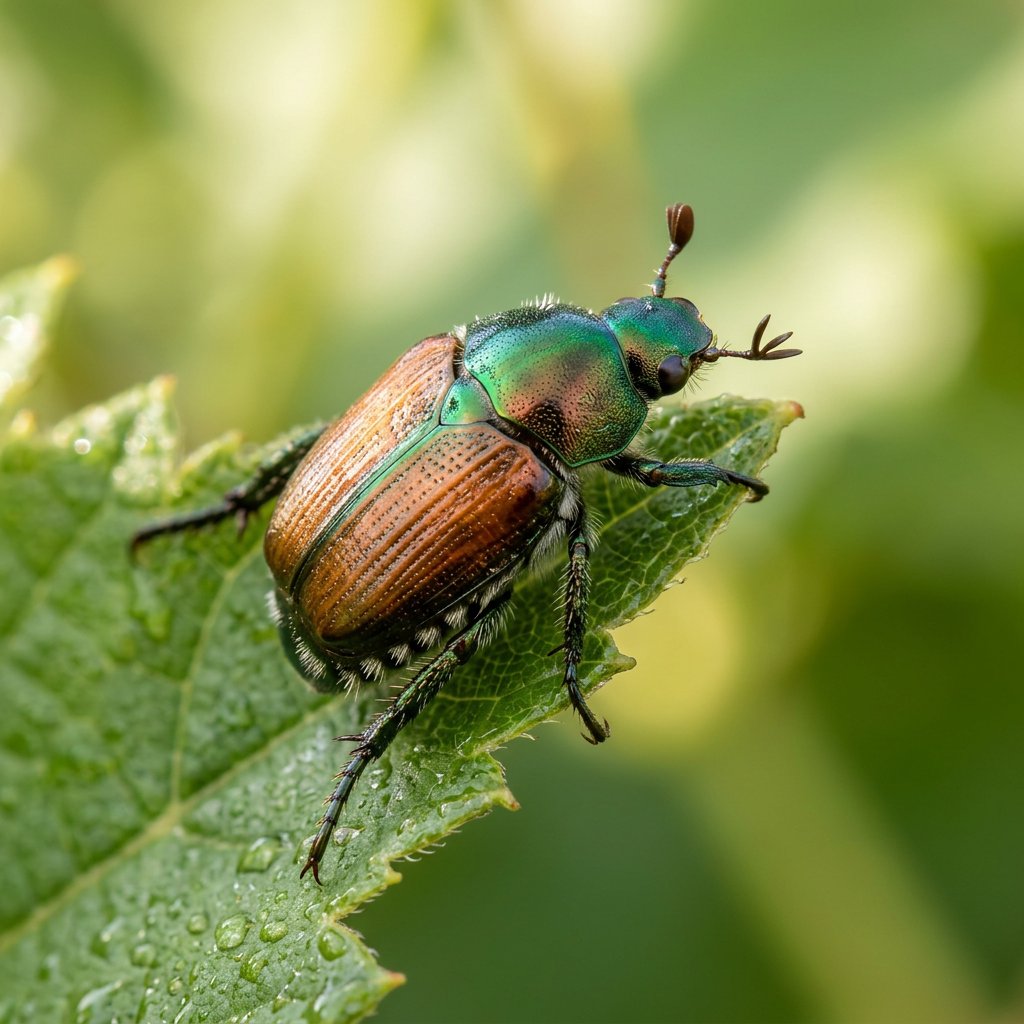
- 🪲 Metallic Palette: The head and thorax are a brilliant, iridescent emerald green, while the wing covers (elytra) are a contrasting copper or bronze color.
- ⚪ White Tuft Marks: Look closely at the sides; they have five distinct tufts of white hair along each side of the abdomen and two more at the rear tip.
- 📏 Size & Shape: They have a stout, oval-shaped body, typically measuring about 1/2 inch (15mm) in length.
🌲 Habitat & Ecology
- 🍽️ Social Feeders: These insects are rarely alone. They release "aggregation pheromones" when they find a good plant, essentially sending a GPS pin to every other beetle in the area to join the feast.
- 🌱 The Underground Phase: Before they emerge as flying beetles, they live as "white grubs" in the soil. They are a major lawn pest, eating through grass roots and causing large brown patches in the turf during late summer and fall.
⚠️ Safety & Toxicity
- ✅ Harmless to Humans: Despite their intimidating "claws" (which they use to grip leaves), they do not bite or sting. They are physically safe to handle or pick off plants by hand.
- 🥀 Garden Threat: While they aren't toxic to touch, they are devastating to plants. They "skeletonize" leaves by eating the soft tissue and leaving only the veins behind, which can severely weaken or kill young trees and shrubs.
✨ Fun Fact
🛩️ Stowaway Experts: Japanese Beetles are such persistent travelers that the USDA has specific "Japanese Beetle Quarantines" for aircraft. Inspectors must check planes flying from infested areas to the Western U.S. to ensure no metallic hitchhikers make the trip!
More Details








