Info
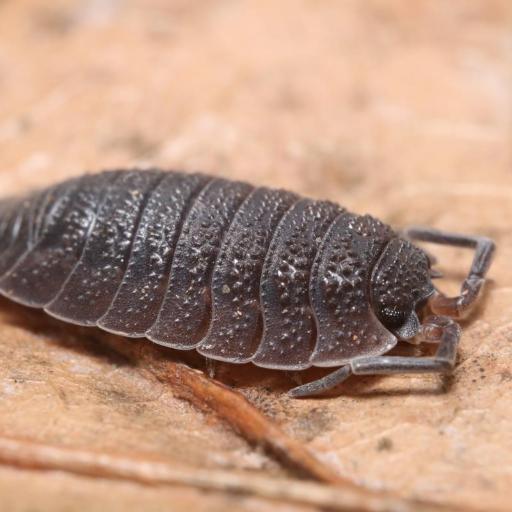
Known by many charming nicknames like the Sowbug, Rough Woodlouse, or Slater, Porcellio scaber is a fascinating little "tank" of the undergrowth. Though you might find them huddled beneath your garden pots, they aren't plants at all—they are actually land-dwelling crustaceans! These ancient survivors act as nature's ultimate recycling crew, tirelessly turning fallen leaves and rotting wood into nutrient-rich soil.
🔍 How to Identify
- 🛡️ The Armor: They have a distinct, oval-shaped body made of overlapping plates, giving them a prehistoric, armored appearance.
- 🌑 Rough Texture: Unlike their smooth-shelled cousins, the "Rough Woodlouse" has a back covered in tiny, visible bumps or tubercles that feel like sandpaper to the touch.
- 👣 Leg Count: As crustaceans, they sport 14 legs (seven pairs), which they use to scurry quickly away from the light.
- 🎨 Color Palette: While most are a classic matte slate-grey, you may occasionally spot rare "calico" versions with mottled orange or yellow patches.
🌲 Habitat & Ecology
- 🍂 The Decomposition Specialist: Their primary role is eating "detritus"—dead plant matter, rotting wood, and fungi. They are essential for a healthy garden ecosystem because they speed up the composting process.
- 💧 The Need for Moisture: Despite living on land, they still breathe through modified gills. This is why you will only find them in damp, dark places like under logs, stones, or thick mulch; if they dry out, they cannot breathe.
- 🌱 Garden Interaction: They are almost entirely "friends" to gardeners. While they might occasionally nibble on a very soft, low-hanging strawberry or a tiny seedling in a greenhouse, they much prefer the taste of decaying leaves over living plants.
⚠️ Safety & Toxicity
- ✅ Status: Completely Harmless.
- 🛡️ Details: Porcellio scaber possesses no stinger, no venom, and their mandibles are far too weak to bite human skin. They are safe for children to observe and pose no threat to household pets. In fact, they are often kept as "clean-up crews" in reptile terrariums!
✨ Fun Fact
Even though they live in your garden, woodlice are more closely related to lobsters and crabs than to ants or beetles! Like their ocean-dwelling cousins, they even carry their offspring in a watery "brood pouch" (called a marsupium) under their bellies until the babies are ready to hatch.
More Details








