Info
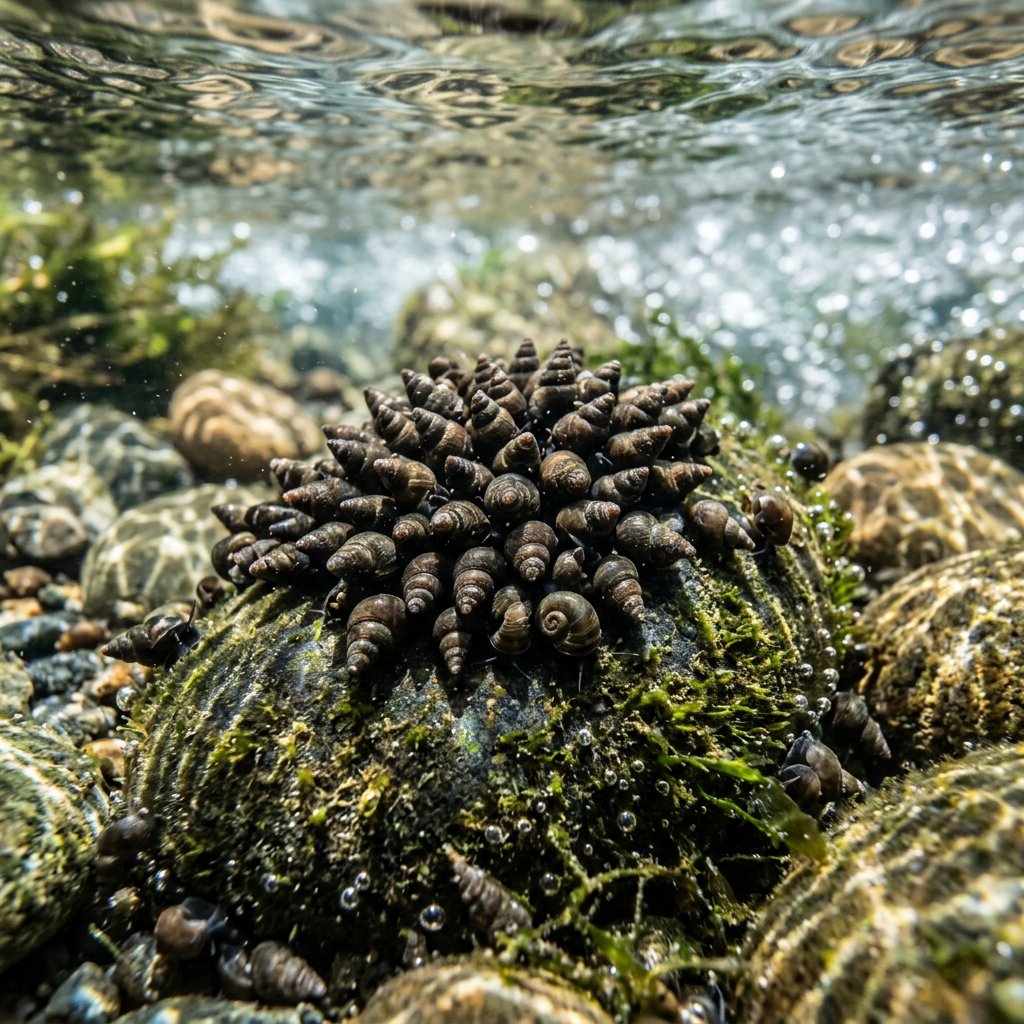
Though often mistaken for a tiny aquatic insect due to its size, Potamopyrgus antipodarum is actually the New Zealand Mud Snail. This minuscule traveler has earned a reputation as a global hitchhiker, silently colonizing rivers and lakes far from its island home. Known for its incredible resilience, it can survive out of water for days, making it a "master of disguise" in the world of invasive species.
🔍 How to Identify
- 🐌 Tiny Scale: These snails are exceptionally small, usually the size of a grain of rice (about 4-6mm long), making them easy to miss on rocks or boots.
- 🌀 Elongated Shell: Look for a high, pointed spiral shell with 5 to 6 distinct whorls, typically colored in shades of grey, light brown, or dark brown.
- 🚪 The Trapdoor: They possess an "operculum," a small bony plate that acts like a front door, sealing the snail inside its shell to protect it from drying out or predators.
🌲 Habitat & Ecology
- 💧 Freshwater Invader: While native to New Zealand's streams, they are highly adaptable and thrive in anything from pristine mountain rivers to brackish estuaries and even industrial cooling pipes.
- 👯 The Clone Army: This species is largely "parthenogenetic," meaning females can produce offspring without mating. A single female can start a massive colony of thousands in just one season.
- 🍽️ Ecosystem Competitor: They act as vacuum cleaners of the riverbed, consuming vast amounts of algae and detritus, which often starves out native insects and larger fish populations.
⚠️ Safety & Toxicity
- 🛡️ Non-Toxic: These snails do not bite, sting, or carry toxins that are harmful to humans or pets through touch.
- 🚫 Ecological Threat: The "danger" here is environmental. They are a Class A invasive species; moving them between water bodies on fishing gear or boots can cause permanent damage to local ecosystems.
- 🧼 Clean Your Gear: If you find them on your equipment, the safest practice is to freeze or dry your gear completely to prevent spreading their "clones" to new waters.
✨ Fun Fact
These snails are survival specialists—they have been known to pass entirely through the digestive systems of trout and ducks completely unharmed, emerging alive and ready to start a new colony on the other side!
More Details








