Info
Often called the Confucian Dart, this tiny, energetic butterfly is a common sight across East and Southeast Asia. Unlike the lazy, graceful flutter of larger butterflies, this insect moves with the speed and precision of an arrow, earning it the "Dart" nickname. It is a delightful garden visitor that brings a flicker of golden-orange to sun-drenched patches of grass.
🔍 How to Identify
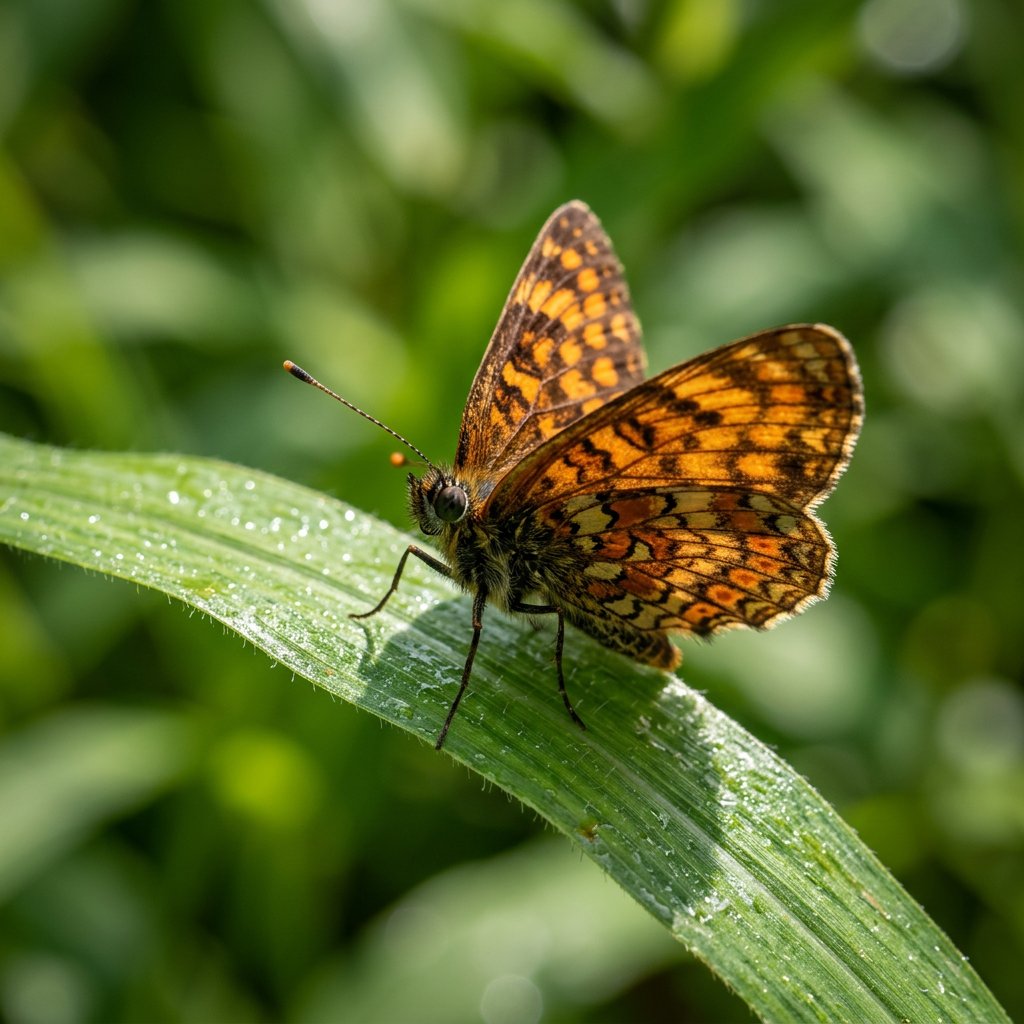
- 🦋 The "Skipper" Silhouette: It has a thick, moth-like body and triangular wings. When resting, it often holds its forewings and hindwings at different angles, a classic trait of the Skipper family.
- 🟠 Golden Patterns: The wings are a vibrant orange-yellow, heavily marked with dark brown or black borders and jagged bands that look like intricate, miniature tiger stripes.
- 📡 Hooked Antennae: Unlike most butterflies that have simple clubbed antennae, the Confucian Dart has a tiny, distinctive "hook" at the very tip called an apiculus.
🌲 Habitat & Ecology
- 🌾 Grassland Resident: You will most likely find them near bamboo thickets, rice fields, or tall lawn grasses. Their caterpillars are "leaf-rollers," stitching grass blades together with silk to create a private home.
- ☀️ Sun Seeker: These insects are highly heliophilic (sun-loving). They are most active during the brightest parts of the day, darting from flower to flower to sip nectar with their long, straw-like proboscis.
⚠️ Safety & Toxicity
- ✅ Harmless Friend: The Confucian Dart is completely non-toxic and lacks any stingers or biting mandibles. They are beneficial pollinators for your garden.
- 🐾 Pet & Child Friendly: They pose no threat to curious pets or children. Because they are so small and incredibly fast, they are much better suited for "spotting" games than for catching.
✨ Fun Fact
When resting, the Confucian Dart often holds its hindwings flat while keeping its forewings upright. This "jet-fighter" stance is actually a sophisticated thermoregulation tactic, allowing it to capture maximum sunlight to keep its flight muscles warm for a split-second takeoff!
More Details








