Info
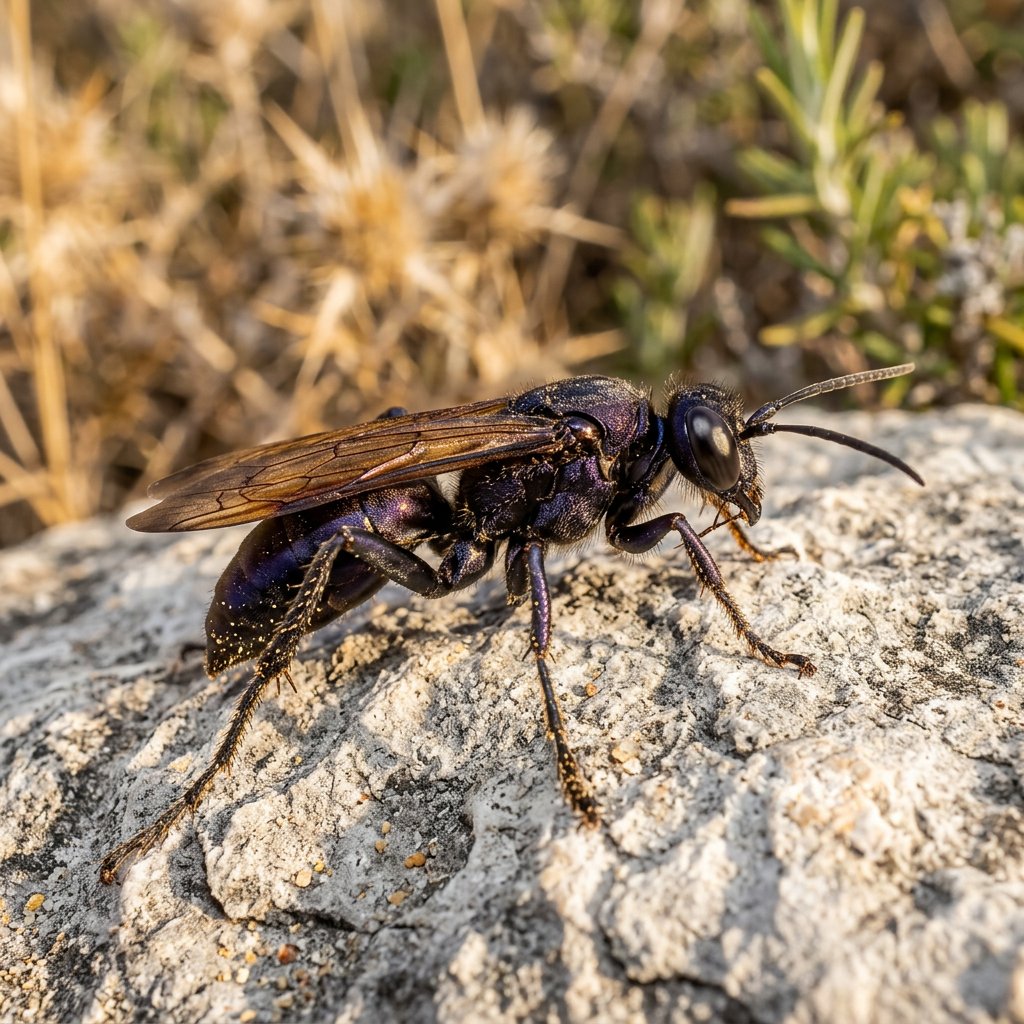
Often called the "Nervous Hunter," wasps of the Priocnemis genus are the restless acrobats of the insect world. While their sleek, dark bodies and constant wing-flicking might seem intimidating, they are solitary creatures with a very specific mission: spider control. They are the ultimate "frenemies"—scary to look at, but excellent at keeping your garden's spider population in check.
🔍 How to Identify
- 🪽 Flicking Wings: One of their most recognizable traits is the way they constantly twitch and flick their wings while scurrying rapidly across the ground.
- 🕷️ Long, Spiny Legs: Their legs are exceptionally long and are often lined with noticeable spines, which they use to grip and maneuver heavy prey.
- ⏳ Sleek Silhouette: They possess a classic "wasp waist" and a smooth, polished body that ranges from deep jet black to metallic blue or reddish-orange, depending on the species.
🌲 Habitat & Ecology
- 🌿 Ground Hunters: Unlike yellowjackets that buzz around your soda, Priocnemis are ground-dwellers. You’ll find them patrolling sun-drenched garden paths, leaf litter, or woodland floors in search of a burrow.
- 🍼 The Living Pantry: These wasps are famous for "parasitoid" behavior. A female will sting a spider to paralyze it, drag it to a burrow, and lay a single egg on it. The spider remains alive but immobile, serving as a fresh meal for the wasp larva when it hatches.
- 🌻 Adult Diet: While the babies are carnivores, the adults are actually peaceful pollinators that fuel their high-energy hunting trips by sipping nectar from wildflowers.
⚠️ Safety & Toxicity
- 🐝 Low Aggression: Priocnemis are solitary wasps, meaning they don't have a hive to defend. They are not aggressive and will almost always choose to run or fly away rather than confront a human.
- 🩹 The Sting: If handled or accidentally stepped on, they can deliver a sharp, painful sting. While the pain is intense for a few minutes, it is generally not dangerous unless you have a specific allergy to wasp venom.
- 🐾 Pets: Keep curious dogs or cats away from them in the grass, as a sting to the nose or paw can cause significant temporary discomfort.
✨ Fun Fact
These wasps are incredibly strong; a female Priocnemis can drag a paralyzed spider that is three to four times her own body weight across several meters of rough terrain to reach her nesting site!
More Details








