Info
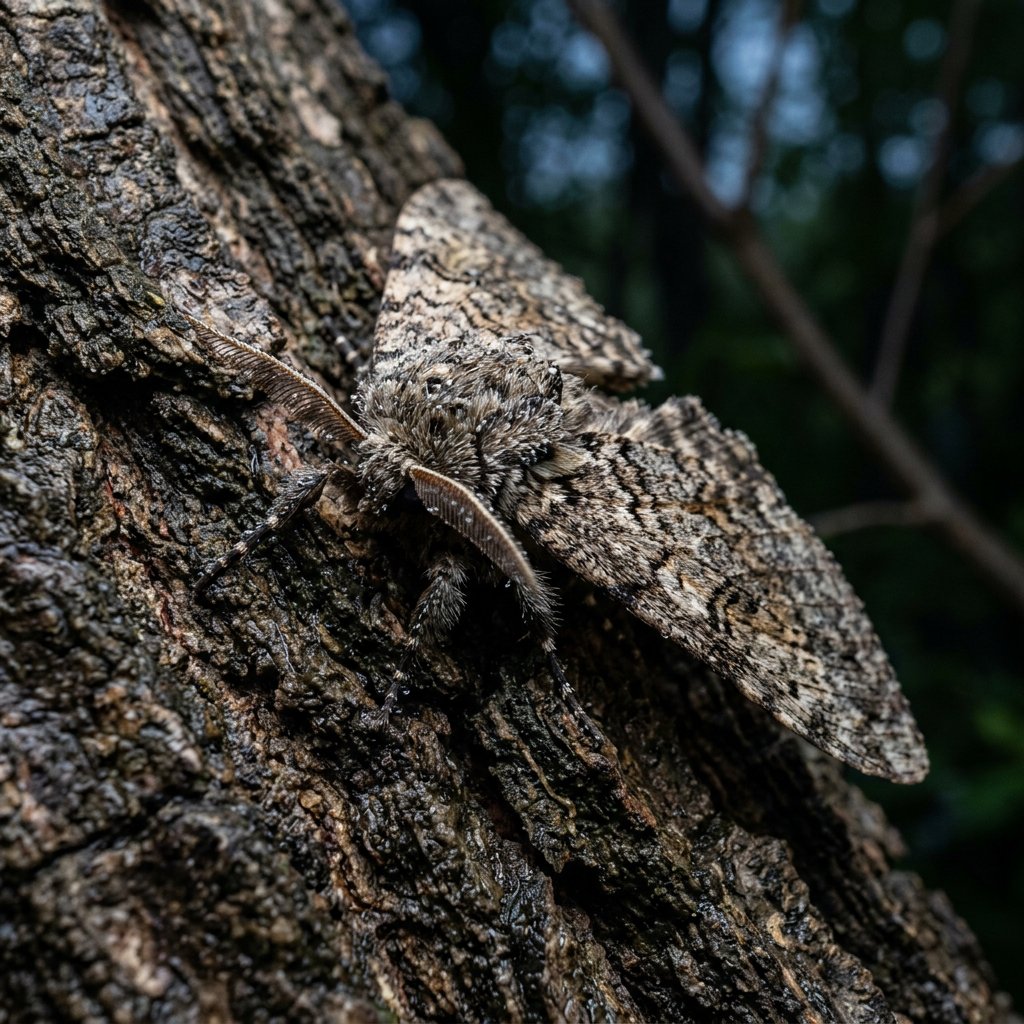
Often called the Carpenterworm Moth, members of the Prionoxystus genus are the heavyweights of the moth world. These nocturnal giants are masters of disguise, evolving wings that perfectly mimic the rough, lichen-covered bark of the trees they inhabit. While the adults are impressive to behold, they are famous (or perhaps infamous) for their long-lived larvae that spend years hidden deep within the wood of deciduous trees.
🔍 How to Identify
- 🪵 Bark Mimicry: Their forewings are a mottled tapestry of gray, white, and black, making them nearly invisible when resting on an oak or willow tree.
- ✈️ Heavy Build: They have thick, robust bodies covered in dense "fur," giving them the appearance of a small, fuzzy fighter jet.
- 🟠 Hidden Color: Males feature a bright orange or yellow patch on their hindwings, which is usually hidden until they take flight to startle predators.
🌲 Habitat & Ecology
- 🌳 Tree Dwellers: You are most likely to find them near hardwood forests or in suburban yards with older Oak, Ash, or Poplar trees.
- 🛠️ The Wood-Borer: Unlike most caterpillars that eat leaves, Prionoxystus larvae tunnel into the heartwood of trees. They act as "engineers," creating large galleries inside the trunk where they live for up to three years before emerging as moths.
- 🌙 The Short Life of an Adult: Once they emerge from the tree as moths, they have no functional mouthparts. They cannot eat and live only a few days—just long enough to find a mate and lay eggs.
⚠️ Safety & Toxicity
- 🛡️ Harmless to Humans: These insects are complete "friends" to people. They do not bite, sting, or carry diseases. Their mandibles are non-functional as adults.
- 🍂 Garden Foe: While safe for humans, they can be a "foe" to your landscape. Heavy infestations of the larvae (carpenterworms) can weaken tree structures, making branches more likely to break during high winds.
✨ Fun Fact
Because the larvae spend years inside the dark interior of a tree, they have developed a unique defense: when disturbed, they can exude a foul-smelling fluid that smells like vinegar to ward off woodpeckers and other predators!
More Details








