Info
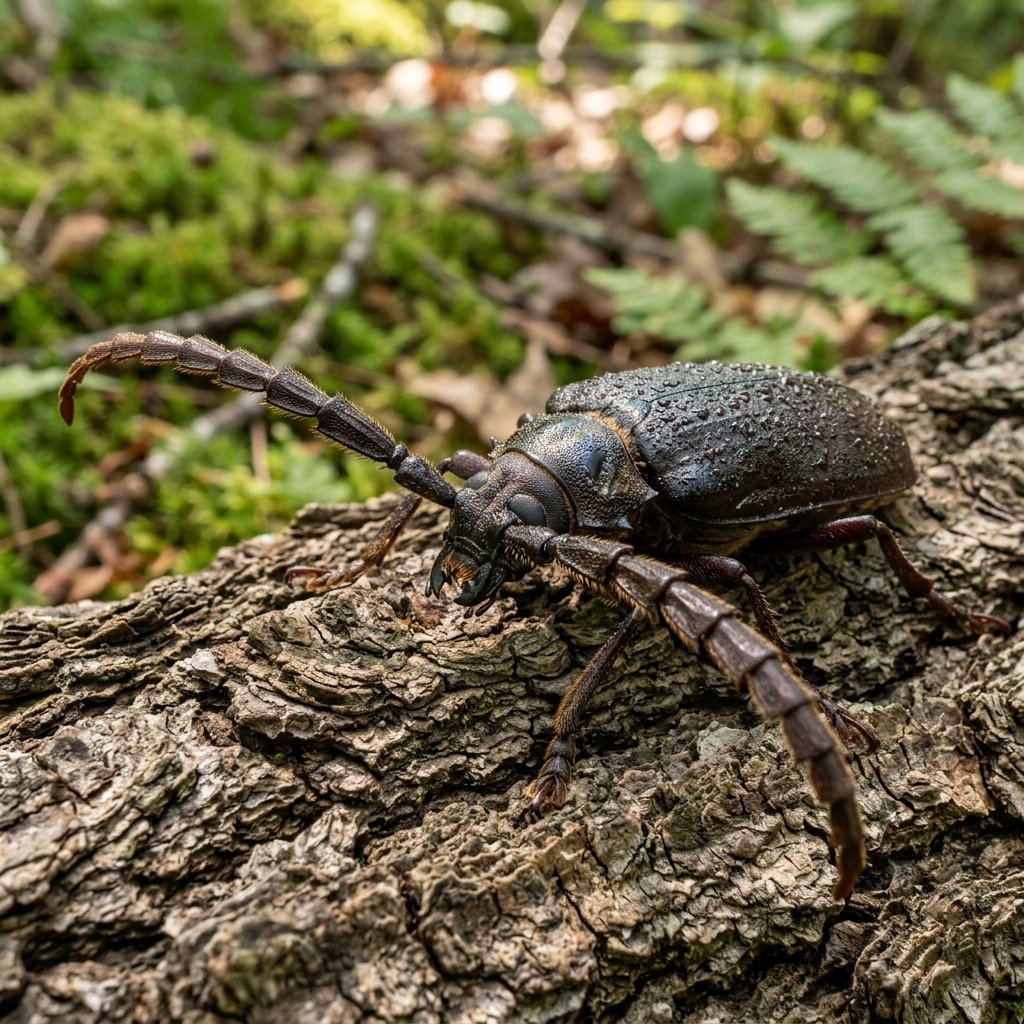
Often mistaken for a terrifying intruder due to its massive size and prehistoric appearance, the Tile-horned Prionus (Prionus imbricornis) is actually a heavy-bodied beetle. While its name might sound like a rare botanical species, this "Tile-horn" is a common sight in North American woodlands and gardens during summer nights. It gets its nickname from its extraordinary antennae, which look like a stack of overlapping roof tiles.
🔍 How to Identify
- antennal The "Tile" Antennae: The most striking feature is the thick, serrated antennae. In males, these are large and deeply notched, resembling a series of overlapping shingles or tiles.
- 🪲 Robust Build: They are broad, somewhat flattened, and can grow quite large (up to 2 inches). Their color ranges from a deep, glossy chestnut brown to nearly black.
- ⚔️ Powerful Mandibles: They possess strong, visible mouthparts designed for chewing through tough material, giving them a formidable "face."
🌲 Habitat & Ecology
- 🪵 The Root Dweller: While you might see the adults clunkily flying toward your porch lights, they spend most of their lives underground. The larvae are "root borers," spending 3 to 5 years chewing on the roots of living or dead hardwood trees like Oak, Hickory, and Chestnut.
- 🌙 Night Moves: Adults are primarily nocturnal. They are somewhat clumsy fliers and are frequently found near the base of trees or scuttling across forest floors in search of a mate.
- 🍂 Nature’s Recycler: Although they can occasionally stress young trees, they play a vital role in forest ecosystems by helping to break down old root systems and recycling nutrients back into the soil.
⚠️ Safety & Toxicity
- 🟢 Non-Toxic: The Tile-horned Prionus is not venomous and does not possess a stinger. They are generally harmless to humans and pets if left alone.
- 🤏 Strong Pinchers: Because of their powerful mandibles, they can deliver a sharp, painful pinch if handled carelessly. It is best to observe these giants from a distance or move them gently with a stick if they wander indoors.
✨ Fun Fact
The Tile-horned Prionus spends about 95% of its life as a grub deep underground! After years of tunneling through the earth and eating wood, the adult emerges for only a few short weeks in the summer with one primary goal: finding a mate before its life cycle ends.
More Details








