Info
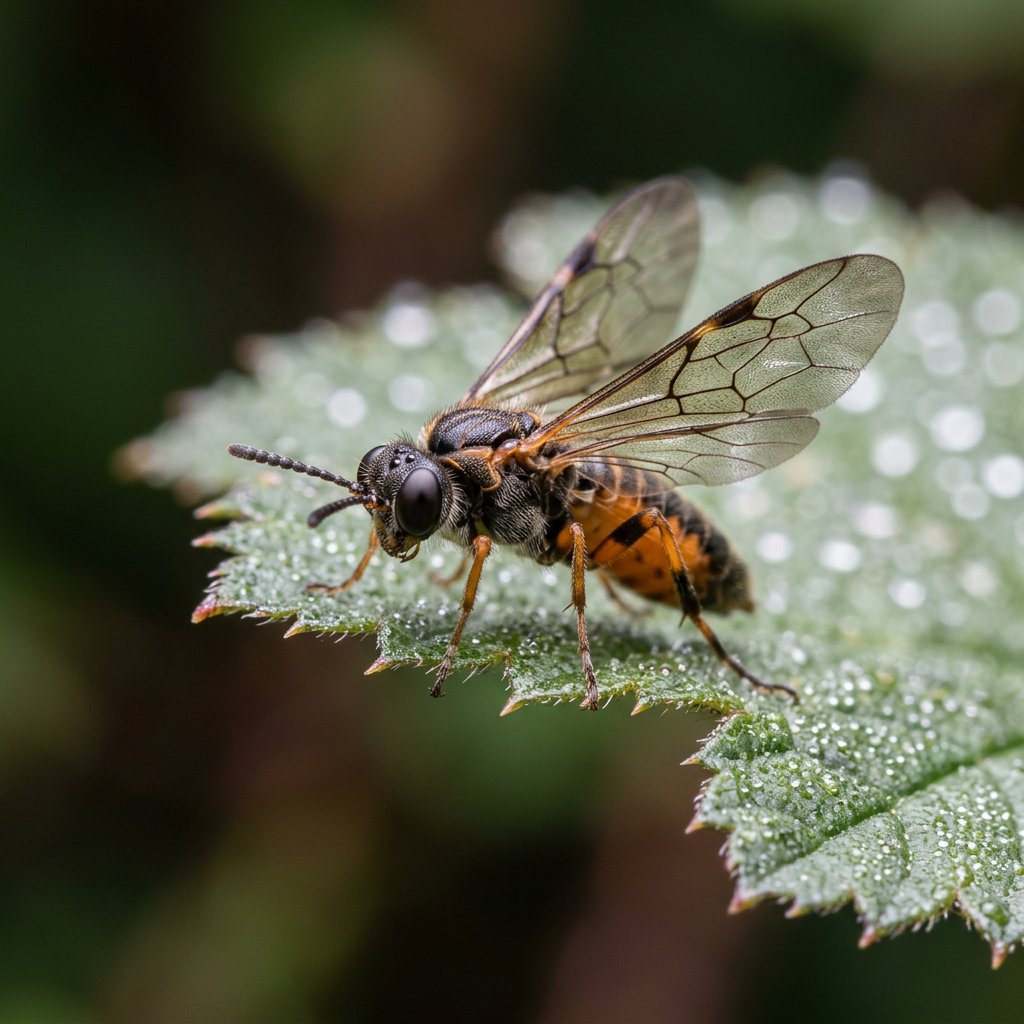
Often called the "Gentle Sawflies," members of the Pristiphora genus are master masqueraders. While they look like wasps as adults and caterpillars as larvae, they are actually a unique group of stingless insects related to bees. They are most famous among gardeners for their remarkable ability to "saw" into plant tissue to hide their eggs, leading to their common name.
🔍 How to Identify
- 🐝 The "Waistless" Build: Unlike true wasps, Pristiphora adults lack a narrow "wasp waist." Their body is thick and cylindrical where the thorax meets the abdomen.
- 🐛 Proleg Count: Their larvae look like moth caterpillars but can be identified by counting their "prolegs" (fleshy leg-like stubs). Sawfly larvae have six or more pairs, whereas moths usually have five or fewer.
- 🎨 Color Variations: Many species, such as the Currant Sawfly, are bright orange and black, while others are a sleek, shiny black or lime green to blend in with foliage.
🌲 Habitat & Ecology
- 🌿 Pickys Eaters: Most Pristiphora species are host-specific. Some spend their lives exclusively on larch trees, while others are the primary "shredders" of currant and gooseberry bushes.
- 🤸 Defensive Gymnastics: When threatened by a bird or a curious human, the larvae often jerk their bodies into a distinctive "S" or "U" shape simultaneously to startle the predator.
- 🍂 Lifecycle: They typically overwinter as pupae in the soil or leaf litter, emerging in spring just as their favorite host plants begin to bud.
⚠️ Safety & Toxicity
- ✅ Status: Completely Harmless. Despite their wasp-like appearance, sawflies do not have a stinger and cannot bite humans or pets.
- 🌱 Plant Health: While they are safe for you, a large "infestation" can quickly defoliate a shrub. They are considered minor garden pests rather than a danger to the ecosystem.
✨ Fun Fact
The "saw" in their name is literal! The female has a specialized, serrated egg-laying organ (ovipositor) that she uses to zip open a slit in a leaf or stem, perfectly tucking her eggs inside the plant's own skin for protection.
More Details








