Info
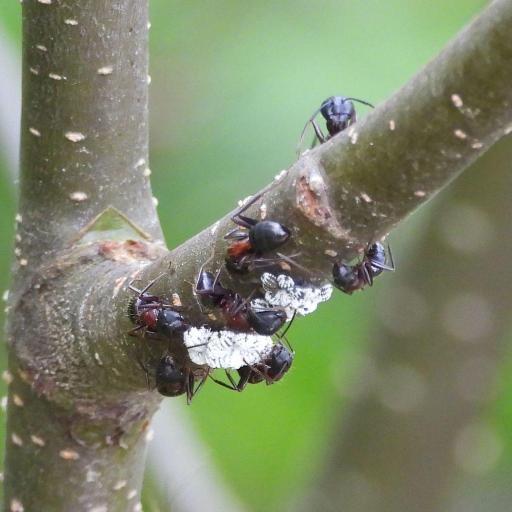
Often called "Fairy Flies" or "Boogie-Woogie Aphids," the Woolly Alder Aphid looks more like a floating bit of lint or a stray piece of cotton than a bug. These tiny insects are famous for their communal living and their synchronized "dancing" when disturbed. While they might look like a fuzzy white mold growing on a branch, they are actually fascinating sap-suckers with a very complex life cycle.
🔍 How to Identify
- ☁️ The "Wool": The most striking feature is the long, white, waxy filaments that grow from their bodies. This "wool" protects them from predators and prevents them from drowning in their own sticky secretions.
- 💧 Honeydew Deposits: You will often find sticky, clear droplets on the leaves below the colony. This "honeydew" is excess sugar excreted by the aphids.
- 🐜 Ant Guardians: Look for ants patrolling the colony. The ants act as "bodyguards," protecting the aphids from predators in exchange for the sweet honeydew they produce.
🌲 Habitat & Ecology
- 🌳 The Two-Tree Strategy: These insects are migratory. They spend their winters as eggs on Silver Maple trees, but move to Alder trees during the summer to form the large, fuzzy colonies people usually notice.
- 💃 The Defense Dance: When a predator (or a curious human) gets too close, the entire colony will wiggle their abdomens in a rhythmic, synchronized "dance." This confuses predators and makes it harder for them to pick out an individual insect to eat.
⚠️ Safety & Toxicity
- ✅ Harmless to Humans: Woolly Alder Aphids are completely non-toxic. They do not bite, sting, or carry any diseases that affect humans or household pets.
- 🌿 Plant Impact: While they can make a tree look messy due to the white wax and the "sooty mold" that grows on their sticky honeydew, they rarely cause significant or permanent damage to healthy, mature trees.
✨ Fun Fact
- 🕺 Boogie-Woogie Bugs: Their rhythmic swaying behavior is so distinct that they have become a viral sensation on the internet, often referred to as "Boogie-Woogie Aphids" because they look like they are dancing to a beat!
More Details








