Info
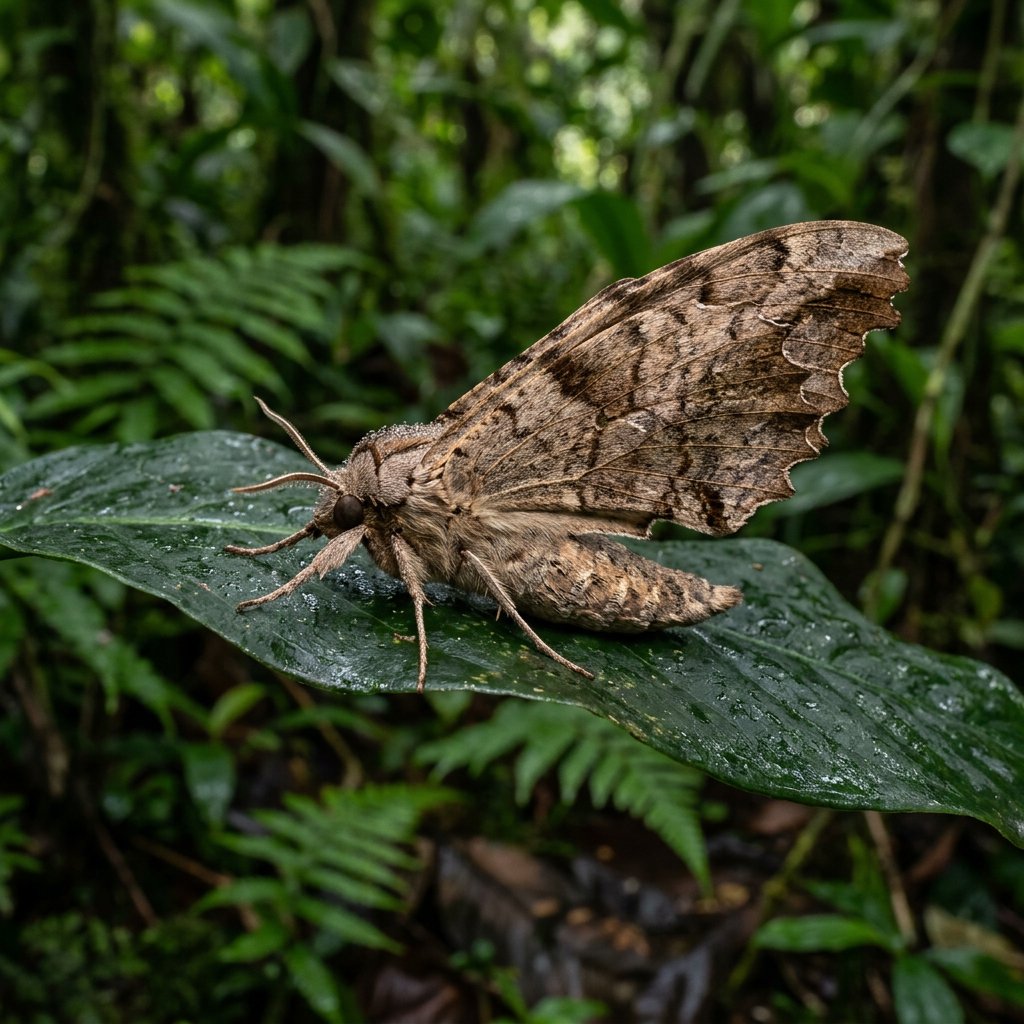
Often referred to as "Streaked Sphinx Moths," members of the Protambulyx genus are the high-performance fighter jets of the insect world. These elegant moths are part of the Sphingidae family, famous for their ability to hover mid-air like hummingbirds while feeding on nectar. With their sleek, aerodynamic bodies and earth-toned camouflage, they are masters of the twilight hours, often appearing as a blur of motion near garden lights.
🔍 How to Identify
- ✈️ Wing Shape: Their forewings are notably long, narrow, and slightly hooked at the tips (falcate), designed for rapid, powerful flight.
- 🎨 Coloration: They typically display a sophisticated palette of tan, mahogany, and olive-green, often featuring a distinct dark "eye" spot or streak near the base of the hindwings.
- 📐 Body Profile: A thick, muscular thorax that tapers into a long, pointed abdomen, giving them a streamlined, cigar-like silhouette.
🌲 Habitat & Ecology
- 🌙 Nocturnal Pollinators: You will rarely see them during the day; they emerge at dusk to visit deep-throated flowers. They are vital pollinators for many tropical and subtropical plants.
- 🌿 The "Hornworm" Phase: As caterpillars, they are bright green with diagonal stripes. They primarily feed on the leaves of the Anacardiaceae family, including Mango trees and Brazilian Pepper.
- 🔦 Light Attraction: Like many moths, they are highly sensitive to light and are frequently found resting on walls near outdoor lamps or "resting" vertically with their wings folded like a tent.
⚠️ Safety & Toxicity
- ✅ Harmless Friend: Protambulyx moths are completely safe. They do not possess a stinger, and their mouthparts are designed only for sipping nectar, not biting.
- 🐛 The Fake Stinger: The caterpillars have a signature "horn" on their tail end. While it looks intimidating to predators like birds, it is soft to the touch and entirely harmless to humans and pets.
✨ Fun Fact
The Protambulyx can unfurl a tongue (proboscis) that is significantly longer than its own body! This allows it to reach nectar at the bottom of tubular flowers that other insects simply can't reach.
More Details








