Info
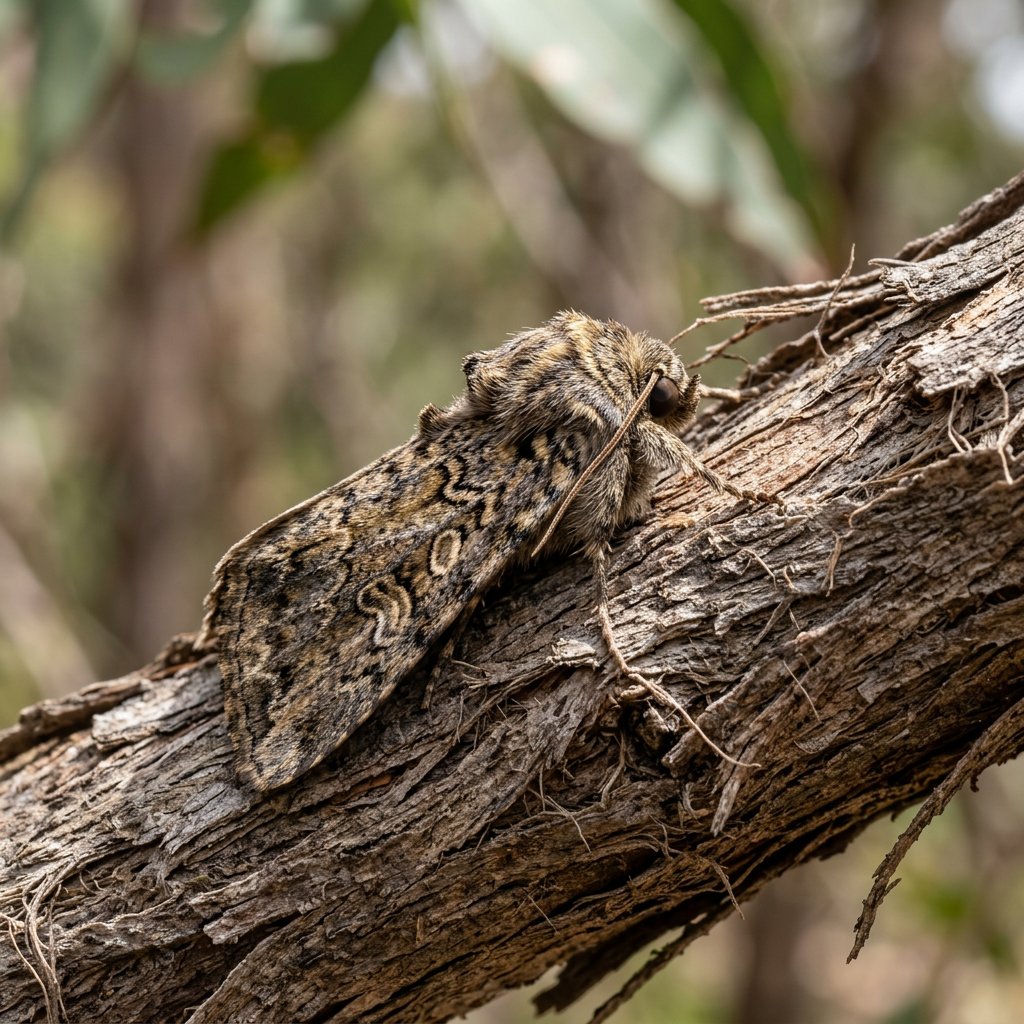
Often referred to as a cornerstone of the Australian nocturnal landscape, moths of the Proteuxoa genus are the ultimate masters of disguise. While the adults are subtle "shadow-moths" that blend into tree bark, their larvae are famously known as Cutworms due to their habit of "cutting" down young seedlings at the base. In folklore and garden circles, they are often seen as the invisible thieves of the vegetable patch, appearing only under the cover of darkness.
🔍 How to Identify
- 🦋 Mottled Forewings: The upper wings are typically shades of earthy brown, charcoal, or grey, featuring intricate wavy lines and small circular "spots" (orbicular stigmata) that help them vanish against lichen and wood.
- 🧶 Furry Thorax: Like many owlet moths, they possess a thick, "hairy" collar around their head and shoulders, which acts as insulation for cool-night flights.
- 🐛 The "C" Curl: The larvae (caterpillars) are smooth-skinned, plump, and lack visible hairs; when touched or disturbed, they immediately curl into a tight, protective "C" shape.
🌲 Habitat & Ecology
- 🌙 Nocturnal Navigators: These insects are strictly active at night. During the day, adults press themselves flat against tree trunks or hide in leaf litter, while the larvae burrow into the top layer of soil to escape the sun and predators.
- 🌾 Generalist Feeders: Proteuxoa larvae aren't picky eaters; they graze on a wide variety of grasses, herbaceous plants, and garden crops. They are particularly fond of the tender stems of newly sprouted seedlings, making them a significant (though natural) challenge for farmers.
⚠️ Safety & Toxicity
- 🟢 Harmless to Humans: Proteuxoa moths and their caterpillars do not bite, sting, or possess toxic hairs. They are physically delicate and rely entirely on camouflage for defense.
- 🐾 Pet Safety: They are non-toxic to cats and dogs. However, because they are common garden inhabitants, the primary risk comes from chemical pesticides used to control them, rather than the insects themselves.
✨ Fun Fact
The Proteuxoa larva is a "fussy eater" with a destructive twist: instead of climbing a plant to eat the leaves, it often bites through the stem at soil level, felling the entire plant like a tiny lumberjack just to eat a few choice bits!
More Details








